




7 Pilgrimage Sites in Spain and Portugal for History and Culture Students
Pilgrimage sites in Spain and Portugal give history and culture students a way to examine faith, architecture, movement and identity across centuries. These places are important not only to religious travellers. They also reveal how routes, shrines and sacred buildings shaped cities, art, trade and collective memory. The seven sites below can support thoughtful learning for both religious and secular school groups.
Quick answer: Prométour plans private, custom history student trips in Spain that are built around one class and one set of learning goals, so the itinerary, group size, and academic focus fit what a teacher actually needs.
Pilgrimage sites in Spain and Portugal give history and culture students a way to examine faith, architecture, movement and identity across centuries. These places are important not only to religious travellers. They also reveal how routes, shrines and sacred buildings shaped cities, art, trade and collective memory. The seven sites below can support thoughtful learning for both religious and secular school groups.
1. Santiago de Compostela, Spain
The Cathedral of Santiago de Compostela marks the traditional endpoint of the Camino de Santiago. Since the Middle Ages, pilgrims have travelled to the city along routes that cross much of Europe.
Students can study why pilgrimage expanded during the medieval period, how hostels and towns developed along the route and how the Camino continues to attract people with religious, cultural and personal motivations. The cathedral also supports lessons in Romanesque, Gothic and Baroque architecture.
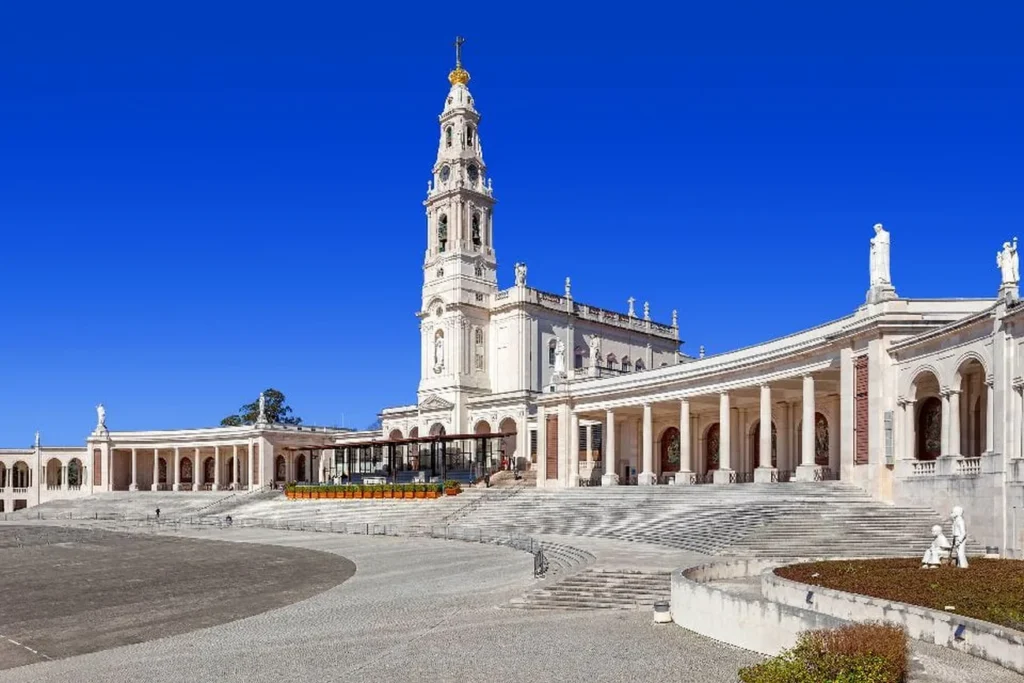
2. Fátima, Portugal
Fátima became a major Catholic pilgrimage destination following reported apparitions of the Virgin Mary to three shepherd children in 1917. The sanctuary now receives visitors from around the world.
For students, the site raises questions about belief, testimony, public devotion and the relationship between local events and global religious movements. Teachers can also discuss how pilgrimage affects the economy and identity of a small community.
3. Montserrat, Spain
The monastery of Montserrat sits within a dramatic mountain landscape near Barcelona. It is associated with the Black Madonna, known in Catalan as La Moreneta, and has long held religious and cultural significance in Catalonia.
The site allows students to connect geography, monastic life, music and Catalan identity. The mountain setting also demonstrates how sacred landscapes can shape the experience of a place.
4. Ávila, Spain
Ávila is closely associated with Saint Teresa of Ávila, a sixteenth-century Carmelite reformer and writer. Its remarkably preserved medieval walls make the city valuable for both religious and urban-history studies.
Students can examine Teresa’s role as a female intellectual and spiritual leader during the Counter-Reformation. Her writings also offer opportunities for literature and philosophy classes.
5. Loyola, Spain
The Sanctuary of Loyola marks the birthplace of Ignatius of Loyola, founder of the Society of Jesus. His life connects the site to the Reformation, Catholic renewal, education and global missionary activity.
A visit can help students understand how one religious order influenced schools and universities around the world. It also opens discussion about the relationship between faith, discipline and education.
6. Bom Jesus do Monte, Portugal
Near Braga, Bom Jesus do Monte is known for its monumental Baroque stairway. Pilgrims traditionally climbed the steps as an act of devotion, passing fountains and chapels that represented spiritual ideas.
Art and architecture students can analyze how movement, landscape and symbolism work together. The site shows that a pilgrimage experience can be designed through space as well as through text or ritual.
7. El Rocío, Spain
The pilgrimage to El Rocío in Andalusia combines religious devotion with regional dress, music, horses and communal travel. It is one of Spain’s most distinctive popular religious traditions.
Students can explore how shared rituals reinforce identity and how traditions adapt as transportation, media and tourism change. The event also provides an opportunity to discuss the difference between observing a living tradition and treating it as entertainment.
Teaching pilgrimage with context and respect
Teachers should prepare students to enter sacred spaces respectfully, regardless of each student’s personal beliefs. Clothing expectations, photography rules and quiet behaviour should be discussed before arrival.
It is also useful to compare motivations. Historically, people travelled for devotion, healing, penance or obligation. Contemporary pilgrims may travel for faith, heritage, physical challenge or reflection. That variety prevents the topic from being reduced to a single explanation.
Connecting the sites through an itinerary
A well-paced route helps students compare locations rather than experiencing each one in isolation. Prométour’s Spain: Pilgrimage Tour provides a foundation that can be customized around religious studies, history, art, Spanish language or cultural heritage.
Pilgrimage as Movement, Belief, and Economy
Pilgrimage sites become more educational when students study the journey as well as the monument. Routes such as the Camino de Santiago shaped roads, hospitals, markets, churches, and patterns of cultural exchange. The movement of pilgrims influenced local economies and created meeting points where languages, customs, and ideas circulated across regions.
Students can compare the original religious motivations with the reasons people walk these routes today. Some travel for faith, others for heritage, challenge, grief, community, or personal reflection. That range helps teachers discuss continuity and change without reducing pilgrimage to a single definition.
Teaching Sacred Places With Respect
A visit should distinguish observation from participation and explain the expectations of an active religious site. Students can examine architecture, symbols, patronage, and historical power while remaining aware that the place still matters deeply to worshippers. A pilgrimage sites in Spain and Portugal unit works best when students consider whose stories are centred, who maintained the routes, and how tourism affects the communities that receive visitors.
How to Build Deeper Understanding
For teachers, the experience becomes most valuable when students know what evidence to look for and how the experience connects to work already completed in class. A focused question, a short observation task, and a purposeful discussion afterward can turn the topic into learning that students can explain in their own words.
For background research, teachers can consult official sources such as UNESCO World Heritage Centre and the Museo del Prado.
Frequently asked questions
What grade levels are Spain student trips suitable for?
Because Prométour builds every itinerary privately for a single group, the pacing and content are set to match the class, from middle-school groups to senior students. A teacher shapes the academic focus, so the same route can serve a beginner history class or an advanced one.
How far ahead should teachers plan Spain student trips?
Most group leaders start nine to twelve months out, which leaves room to confirm dates, fundraise, and align the route with the curriculum. You can request a custom quote and a draft itinerary early, then adjust it as enrolment settles. See the trip page for a starting point.
How does the trip connect to what students study in class?
Each site is chosen to reinforce classroom units, so students meet the primary sources and places behind the textbook. Teachers can request pre-trip and post-trip materials that tie visits back to the curriculum.