










Discover the Amazing Carnaval de Québec with Prométour
A Quebec Winter Carnival student trip combines French culture, winter traditions, outdoor activities, music, and festival energy. The event gives students a memorable setting for language practice and cultural learning. The details covered above give teachers a foundation for building an itinerary that delivers real educational outcomes.
For over 60 years, the Carnaval de Québec has transformed the city’s coldest weeks into the most visited period of the year. The largest winter carnival in the world, it draws over a million visitors annually from across North America and beyond. For French immersion teachers, it is one of the most fully immersive French-language environments available without crossing the Atlantic.
When planning a carnaval de quebec student trip winter festival. The details covered above give teachers a foundation for building an itinerary that delivers real educational outcomes.
Why a Quebec Winter Carnival Student Trip Is Memorable
The tradition of winter celebration in Québec traces to the French colonial period. Communities gathered before Lent to eat, drink. Celebrate together against the cold. In the 1880s, informal winter carnivals began to be organised in Québec City. Drawing visitors from as far as the United States and establishing a tradition of celebrating winter that was distinctive to the province.
These early carnivals were interrupted by periods of economic difficulty and the two World Wars. For authoritative information on Quebec festivals and events,Bonjour Quebecis the official tourism resource for teachers planning group travel to the province. In 1955, a group of civic leaders, including Louis-Philippe Plamondon, Wilbrod Bhérer.
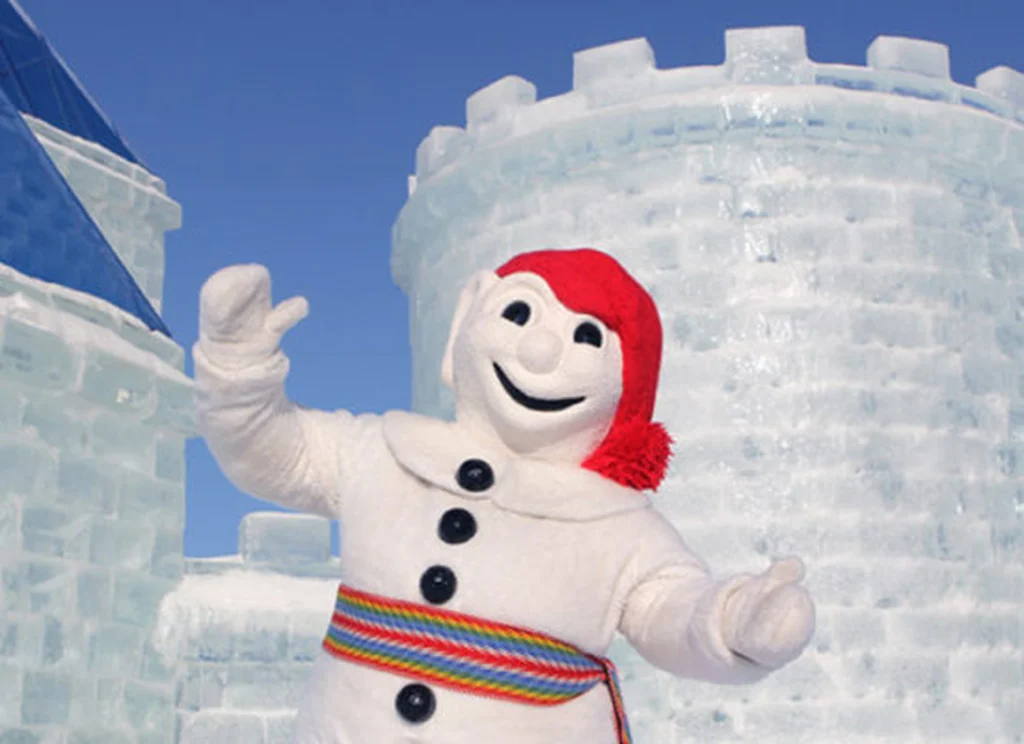
Louis Paré, revived the tradition with the explicit goal of creating an annual event that would generate tourism and economic activity for the city during its coldest months. The modern Carnaval de Québec came into the world, and Bonhomme Carnaval appeared that first year. Since 1955, the carnival has been held every February without interruption and has grown into one of the defining cultural events of the Québécois calendar.
The Ice Palace, Bonhomme’s official residence, is rebuilt from scratch each year in a new location with a new architectural theme. The event programme has expanded and evolved over seven decades. Its core character, outdoor, communal, fully French, and unapologetically cold, has remained consistent.
The Events
The Ice Canoe Race
The ice canoe race is the athletic centrepiece of the Carnaval de Québec and one of the most physically demanding sporting events in Canada. Teams of five paddle and portage their canoes across the St. Lawrence between Québec City and Lévis, navigating ice floes, open water.
Every condition in between. The tradition dates to the era when the ice canoe was the only means of crossing the river in winter. The race preserves and celebrates that history. For student groups watching from the shore, the race is an immediate and vivid demonstration of the physical and historical relationship between the Québécois people and the river that has defined their geography for 400 years.
Ice Sculpture Competitions
International teams of ice sculptors compete at the Carnaval, producing works of varying scales across multiple sites in the city. The sculptures are illuminated at night and are free to view throughout the festival period. For art students, the discipline of ice sculpture, working with a material that has no permanence. That responds to temperature and light and time, raises interesting questions about the nature of artistic practice and the relationship between effort and duration. For all students, the scale and quality of the best ice sculptures are genuinely unexpected.
The Night Parade
The Carnaval night parade through the streets of Old Québec is one of the festival’s most consistently popular events. Drawing thousands of spectators to the streets in temperatures that can reach minus 20 degrees Celsius. The parade includes floats, musical performances, community groups, and Bonhomme.
Takes place against the backdrop of the illuminated walls and buildings of Old Québec. For student groups, standing together in the cold watching the parade is a shared physical experience that produces a specific kind of group memory. The kind that comes from being uncomfortable together in a beautiful place.
Outdoor Activities
The Carnaval programme includes tubing, ice slides, snow sculpting for visitors, snowshoeing. Other outdoor activities spread across multiple sites in the city and surrounding area. The Village des Neiges (Snow Village) near the Plains of Abraham provides a structured outdoor activity area that is designed specifically for carnival visitors.
Valcartier resort, 25 kilometres north of the city, operates the largest snow and ice park in North America alongside its Hôtel de Glace. Is a natural excursion from a Carnaval itinerary. Our Québec City Winter Carnival Tour is specifically designed around the festival programme.
The French Immersion Dimension
For French immersion teachers, the Carnaval is the most fully French-speaking student experience available in North America. Every announcement, every sign, every interaction with a vendor, a guide, or a carnival official happens in French. The crowds are overwhelmingly Québécois. The cultural content is distinctly Québécois.
The language students have been studying in a classroom context is, for two weeks in February. The only language that works. For students who have always understood French as a school subject rather than a living communication tool. The Carnaval tends to produce a shift in that understanding that classroom instruction cannot replicate. Our Ottawa, Montréal and Québec City Tour can be timed to coincide with the Carnaval for groups who want to combine urban exploration with festival immersion.
Practical Advice for Teachers
Cold weather preparation is essential. Temperatures during the Carnaval typically range from minus 10 to minus 25 degrees Celsius. Students who are not dressed appropriately will be miserable rather than engaged. Before departure, brief students and parents on what to pack. Base layers, insulating mid-layers, a waterproof outer layer, warm gloves or mittens, a hat that covers the ears.
Warm boots rated for at least minus 20 degrees. Students who arrive prepared for the cold tend to describe the experience as invigorating rather than unpleasant. Is the difference between a successful Carnaval trip and a difficult one.
Prométour builds fully private school group tours to the Carnaval de Québec. Coordinated around the festival programme and designed for French immersion and history teachers. Browse theQuébec City Winter Carnival Tour, theOttawa. Montréal and Québec City Tour, or the Bonjour Québec: Spring Journey to find the right itinerary for your group.
When planning a carnaval de quebec student trip winter festival. The details covered above give teachers a foundation for building an itinerary that delivers real educational outcomes.