













SpainCosta RicaSpanishArt & ArchitectureOctober 15, 2018 | 4 min read
Carretas of Costa Rica: An Interdisciplinary Spanish/Art Project
A Costa Rica art lesson built around painted carretas can connect Spanish, visual arts, history, symbolism, and national identity. The colourful ox carts provide a strong visual entry point for an interdisciplinary classroom project. For Spanish and art teachers looking for an interdisciplinary project that connects language, visual art.
Latin American cultural history, the carreta is a rich starting point. There are compelling educational reasons to bring students on a Costa Rica student trip.
Why a Costa Rica Art Lesson Works Across Subjects
The carreta originated in the 1880s as a practical tool for transporting Costa Rica’s growing coffee harvest from the highland plantations to the port of Puntarenas on the Pacific coast. A journey that could take several weeks through mountainous terrain. The ox-carts were wooden, sturdy.
Built to handle the weight of heavy coffee sacks on roads that were. In many cases, little more than muddy tracks. The distinctive feature that set Costa Rican ox-carts apart from those in other countries was the wheel design. Concentric circles of decorated wood that produced a musical sound as the cart moved.
Each region developing its own identifying pitch and pattern. The sound of the wheels identified where a cart came from long before it was visible. A practical system in a country where roads were few and destinations far apart. The painting of the carretas developed gradually from this functional base.
It is believed that the practice of painting the carts began as a way of protecting the wood from the wet season rains and the moisture of the mountain passes. It quickly became a form of regional identification. The colours and patterns of a carreta indicated which part of the country it came from, and by extension.
Family or farm had produced it. By the early 20th century, carreta painting had become a competitive art form. With regional festivals and design competitions that persist today. The craft earned UNESCO inscription on UNESCO’s Representative List of the Intangible Cultural Heritage of Humanity in 2005. Our Costa Rica: Adventure Tour includes a visit to a working coffee plantation where carretas remain part of the cultural landscape.
The Artisans of Sarchí
The village of Sarchí, in the northern province of Alajuela, is the acknowledged centre of carreta production in Costa Rica. The artisans of Sarchí produce the most refined examples of the craft. The village market is lined with workshops where visitors can watch painters applying the intricate floral, geometric.
Mandala patterns that are the hallmarks of the Sarchí style. The Joaquín Chaverri ox-cart factory, founded in 1903, is the oldest and largest carreta producer in the country and offers tours of the production process from raw wood to finished painted cart. Sarchí is approximately 50 kilometres from San José and is a standard stop on many Costa Rica educational itineraries. Our Costa Rica: Adventure and Volunteering Tour can include a Sarchí workshop visit as part of the itinerary.
The Designs
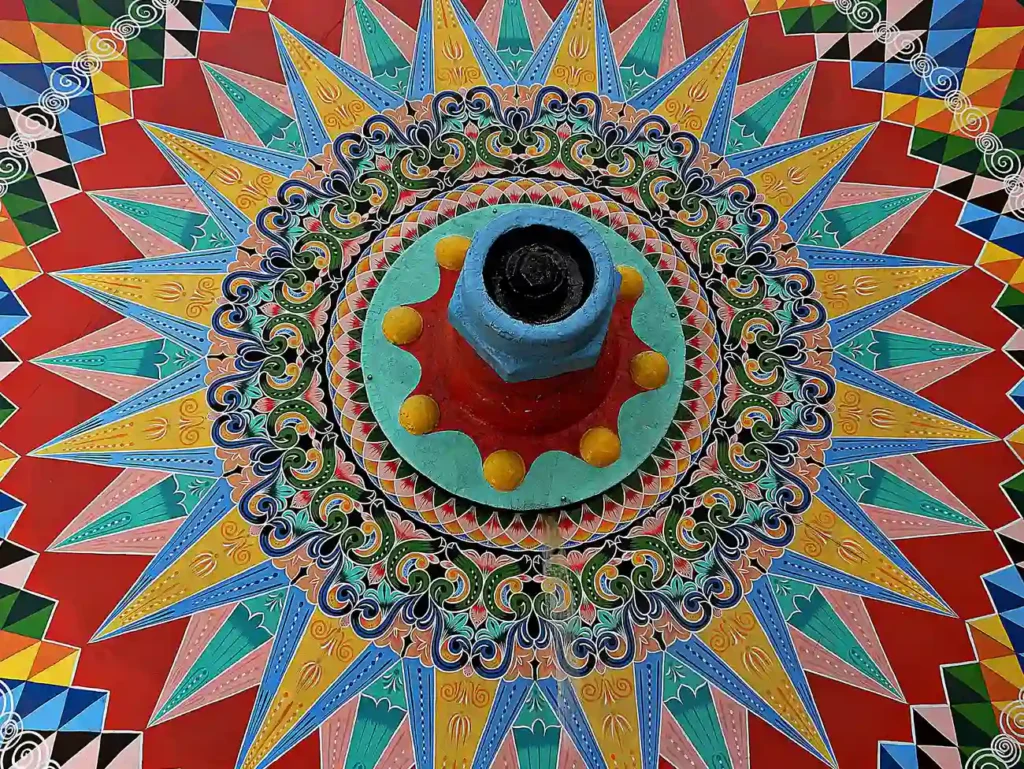
Traditional carreta designs use a specific vocabulary of visual elements: concentric circles, floral mandala patterns, geometric borders. Landscapes rendered in vivid primary colours against a dark background. The palette is bright and intentional. Each colour historically carrying regional associations. Contemporary artisans maintain the traditional vocabulary while incorporating new variations.
The design competitions held at national festivals continue to push the craft forward. The designs are applied entirely by hand using small brushes. A fully decorated carreta can take weeks to complete. For art students, the designs offer a study in radial symmetry, geometric pattern. The relationship between craft tradition and individual expression.
Classroom Project: Making Carretas
This interdisciplinary project works well in Spanish and art classes before or after a trip to Costa Rica. During the research phase, students use Spanish-language sources to investigate the history of the carreta and its UNESCO designation.
The role of the craft in Costa Rican national identity. They write a short paragraph in Spanish describing the tradition and why it matters, using vocabulary from the unit. Design phase (art class):Students create their own carreta design on paper, using the traditional vocabulary of concentric circles, floral patterns.
Geometric borders as a starting framework. They must select a colour palette and explain their choices in relation to the traditional regional associations.
Production phase:Using cardboard circles cut to represent carreta wheels, or small wooden discs available from craft suppliers.
Students transfer their designs and paint them. The result is a set of student-made carreta wheels that can be displayed as a classroom installation.
Presentation phase (Spanish class):Each student presents their carreta design to the class in Spanish.
Explaining the design choices and connecting them to the historical and cultural context they researched. The presentation format reinforces speaking skills while the content reinforces cultural knowledge. The project takes approximately three to four class periods and produces a tangible. Visually striking outcome that connects two subject areas in a way that is direct rather than forced.
For groups that have visited Costa Rica, the project deepens a specific cultural memory. For groups preparing to go, it builds meaningful anticipation.
Prométour builds fully private, custom school group tours to Costa Rica for Spanish, art, STEM. Community outreach programmes. Browse theCosta Rica: Adventure TourorCosta Rica: Adventure and Volunteering Tourto see what a customised itinerary could look like for your group. The curriculum connections and logistical support available make this one of the most rewarding programmes to build.