









Costa RicaMay 18, 2016 | 5 min read
10 Reasons Why You Need to Visit Costa Rica
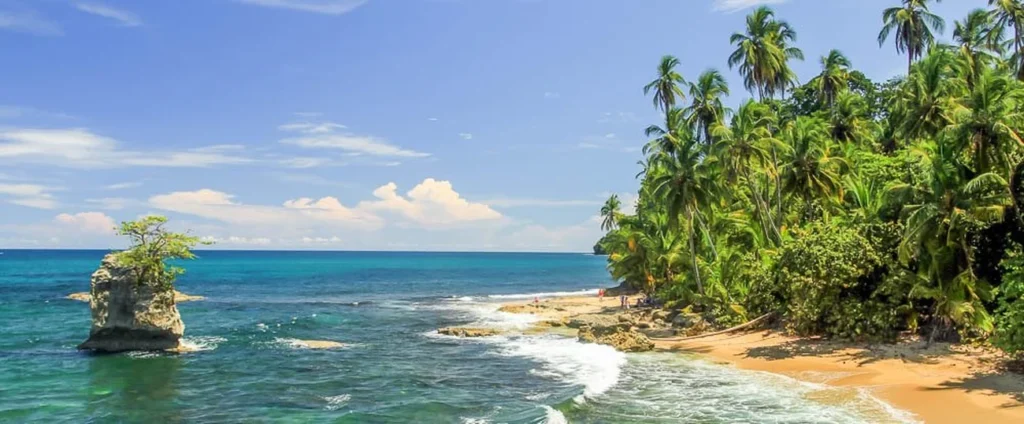
Costa Rica student travel brings science, Spanish, sustainability, and outdoor learning together in one compact destination. These ten reasons show why the country works especially well for school groups. Here is why it keeps appearing at the top of educational travel shortlists. There are compelling educational reasons to bring students on a Costa Rica student trip.
Prométour offers several Costa Rica itineraries for school groups, each fully private and built around your curriculum and subject focus. Take a look at theCosta Rica: Adventure Tour or Costa Rica: Adventure and Volunteering Tour as starting points that we customise around what you want your students to experience. The curriculum connections and logistical support available make this one of the most rewarding programmes to build.
Why Costa Rica Student Travel Works Across the Curriculum
Costa Rica contains roughly 5% of the world’s biodiversity in a country smaller than the state of West Virginia. Students encounter species, from sloths and toucans to poison dart frogs and howler monkeys. That they have studied in class but never seen outside a photograph.
Manuel Antonio National Park and the Tortuguero canals are among the most accessible wildlife viewing areas in Central America. The encounters there tend to produce the kind of sustained attention that teachers work hard to achieve in a classroom. Prométour’s Costa Rica: Adventure Tour includes structured wildlife experiences at carefully selected reserves.
2. Active Volcanoes as a Geology Lesson
Costa Rica has six active volcanoes. Arenal, in the northern lowlands, is the most visited. Its near-perfect conical shape is visible from much of the surrounding region. The hot springs fed by its geothermal activity provide a tangible connection between geological processes and the landscape.
Poás, near San José, has one of the largest active craters in the world and is accessible by road. For STEM and earth science programmes, visiting an active volcano is a field experience with no classroom equivalent.
3. Cloud Forests and Hanging Bridges
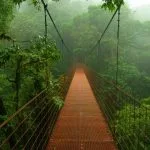
The Monteverde and Santa Elena cloud forests sit at elevations where temperatures and moisture levels produce a permanently misty environment supporting a different ecosystem than the rainforests below. Walking across hanging bridges above the forest canopy gives students a perspective on forest ecology that is only available from that height. For biology and environmental science groups, it is a productive and visually striking field site.
4. Ziplining and Shared Physical Challenge
Costa Rica developed much of the commercial ziplining infrastructure that now exists across Central and South America. For student groups, ziplining serves a practical purpose beyond the activity itself. It is a shared physical challenge that tends to shift the group dynamic. Particularly for students who are hesitant at the start and complete the circuit anyway. Teachers consistently note it as a turning point in group cohesion during longer trips.
5.Pura Vida: The Lived Philosophy of Costa Rica
Pura vida, meaning pure life, is both a greeting and a philosophy in Costa Rica.
It signals an approach to daily life that prioritises well-being, environmental consciousness. Human connection over material accumulation. For social studies and philosophy classes, it is a genuine cultural concept worth discussing. The country’s decision to abolish its military in 1948 and redirect that budget to education and healthcare is a related fact that tends to generate productive classroom debate when students encounter it in context.
6. Chocolate and Coffee Production
Visiting a working cacao or coffee farm in Costa Rica gives students a direct view of global commodity production at the source. They can see the cacao pods growing on the trees, learn the fermentation and drying process. Trace the distance between raw bean and finished chocolate.
For economics and geography teachers, it is a useful entry point into discussions of global trade, fair trade certification. The economics of agricultural export.
7. The Sloth Sanctuary
Costa Rica is home to the Aviarios Sloth Sanctuary near the Caribbean coast. The world’s largest sloth rescue and rehabilitation centre. Injured and orphaned sloths are cared for and. Possible, returned to the wild. A visit gives students a direct encounter with conservation work in practice. For biology and environmental science students, it also opens a discussion of habitat loss and the consequences of rainforest fragmentation for slow-moving species that cannot relocate quickly.
8. Rainforest Hiking
Costa Rica’s rainforests, in Corcovado, Manuel Antonio, Tortuguero. The Osa Peninsula, are among the most biodiverse in the world. Guided hikes through the forest floor give students access to layers of the ecosystem that are invisible from a road. The insects, the fungi, the epiphytes, the soil. A good naturalist guide can turn a two-hour hike into a comprehensive field lesson in tropical ecology.
9. Waterfalls: La Fortuna and Beyond
La Fortuna waterfall, near Arenal, drops 70 metres into a turquoise pool at the base of a rainforest canyon. The hike down is about 500 steps, steep, narrow. Worth it. Costa Rica has dozens of accessible waterfalls across the country, each situated in a different ecological context. They function well as landmarks in a longer hiking itinerary and consistently rank among the most photographed moments of any trip to Costa Rica.
10. Environmental Leadership as a Case Study
Costa Rica generates more than 98% of its electricity from renewable sources, primarily hydroelectric. Geothermal, wind, and solar making up the remainder. It has set a national goal of carbon neutrality and has reforested a significant portion of land that was cleared in the mid-20th century.
For environmental science, geography. Social studies teachers, these policy decisions make Costa Rica a productive case study in how a small. Resource-limited country can position itself as a global leader in environmental governance. Our Costa Rica: Adventure and Volunteering Tour is designed around this kind of active, curriculum-rich engagement.