

















Dog Sledding in Québec a Prométour Winter Adventure
A Quebec dog sledding student trip gives learners an active way to experience winter culture, teamwork, and outdoor learning. The activity also creates a memorable contrast to museum visits and classroom-based lessons. The Quebecois relationship with cold and snow is one of active engagement. Few activities demonstrate that better than dog sledding.
For student groups visiting Quebec in winter, a guided dog sledding session in the forests north of Quebec City is one of the most memorable and distinctly Canadian experiences available on any school trip itinerary. Dog sledding on a Quebec student trip in winter is one of the most physically engaging and culturally distinctive activities available in North America.
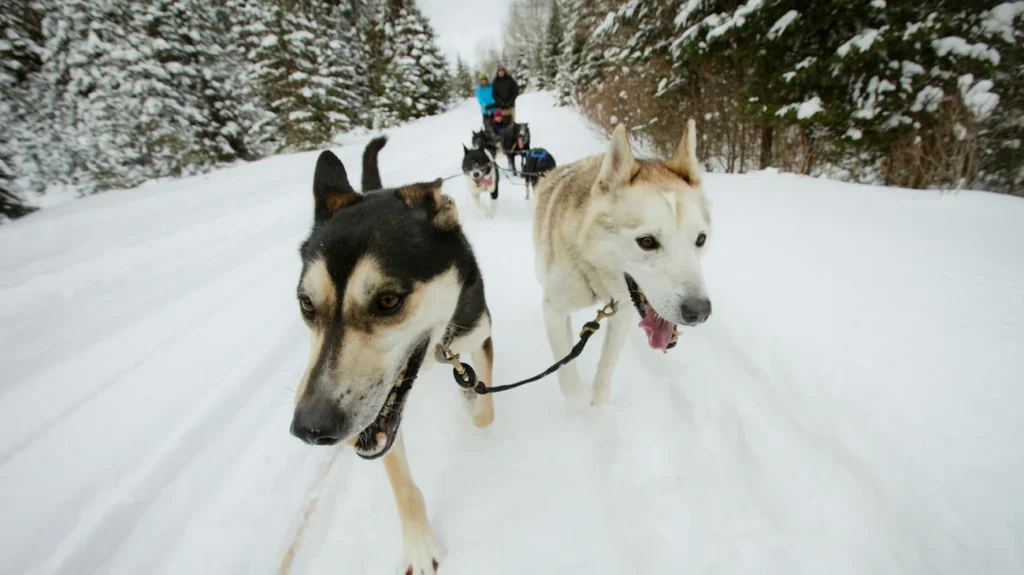
Why a Quebec Dog Sledding Student Trip Stands Out
A guided dog sledding session begins with an introduction to the team of dogs and an explanation of how a sled dog team is structured. Sled dogs have specific roles: the lead dog sets direction and pace, swing dogs assist through turns. Team dogs provide the primary pulling power.
Wheel dogs handle the heaviest loads on curves. Students learn to read the dogs before they take the sled reins themselves. The experience of guiding a dog team through a forested trail in winter is physically engaging in a way that most student trip activities are not.
The cold is real, the speed is real. The coordination required to work with the dogs rather than against them takes the full session to begin to develop. Most operators offer sessions of one to two hours. Groups rotating between driving the sled and riding as a passenger.
Our Quebec City Winter Carnival Tour includes dog sledding as an optional activity. Our Bonjour Quebec: Spring Journey can be structured to capture late-season snow conditions in the Laurentians.
The History of Dog Sledding in Quebec
Dog sledding has deep roots in the Indigenous cultures of northern North America. The Inuit and many First Nations groups used dog teams as primary transportation across snow and ice long before European contact. French colonists in New France adopted this technology. Dog sledding remained an important means of winter travel in Quebec until the 20th century.
The cultural connection between Quebec, winter, and the working dog is embedded in folk songs, paintings. The oral traditions of both French Canadian and Indigenous communities.
Why It Works for Student Groups
Dog sledding works for student groups because it requires genuine participation rather than observation. Students who are reluctant to engage with museum content tend to respond very differently to an activity that puts them in charge of a team of dogs in a forest. A morning at a sugar shack followed by an afternoon of dog sledding gives students a full day in the Quebec countryside that connects directly to the history of rural French Canadian life and the traditions that define Quebec culture.
Practical Information
Sessions are available from December through March, with February the most reliable for snow conditions. Temperatures can range from minus 5 to minus 25 degrees Celsius. Students need insulated waterproof outerwear, warm gloves, a hat covering the ears. Boots rated for cold temperatures. Most operators provide heated indoor facilities for briefing and warming breaks. Prometour coordinates logistics with operators who have established track records with school groups.
Dog sledding in Quebec is available as part of Prometour winter school group tours. Browse theQuebec City Winter Carnival Touror Ottawa. Montreal and Quebec City Tour and ask your consultant about including a dog sledding session. The curriculum connections and logistical support available make this one of the most rewarding programmes to build.