



Why Ecuador Creates Eye-Opening Learning for Students
Ecuador educational travel gives students access to an unusually wide range of learning environments within one country. Learners can study high-altitude Andean communities, colonial urban history, cloud forests, Amazon ecosystems, and the Galápagos Islands while practicing Spanish and considering how geography shapes culture. For teachers, that variety supports interdisciplinary programs that connect science, language, history, and global citizenship.
Quick answer: Prométour plans private, custom student trips in Ecuador that are built around one class and one set of learning goals, so the itinerary, group size, and academic focus fit what a teacher actually needs.
Ecuador educational travel gives students access to an unusually wide range of learning environments within one country. Learners can study high-altitude Andean communities, colonial urban history, cloud forests, Amazon ecosystems, and the Galápagos Islands while practicing Spanish and considering how geography shapes culture. For teachers, that variety supports interdisciplinary programs that connect science, language, history, and global citizenship.
A compact country with remarkable geographic range
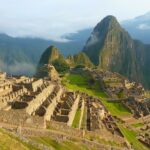
Ecuador is crossed by the Andes and the equator, while its territory also includes Pacific coast, Amazon basin, and island ecosystems. These contrasts help students see geography as an active force that shapes climate, agriculture, settlement, transportation, and daily life.
Teachers can ask students to compare elevation, biodiversity, land use, and cultural practices across regions. The destination becomes a living case study rather than a collection of unrelated attractions.
Spanish learning in real social contexts
Students encounter Spanish in markets, restaurants, workshops, community visits, and ordinary conversations. These situations give familiar vocabulary a purpose and introduce regional pronunciation and expression.
Preparation matters. Role-play activities before departure can help learners practice greetings, respectful questions, shopping language, and strategies for continuing a conversation when they do not understand every word.
Biodiversity and conservation become tangible
Ecuador is especially valuable for biology and environmental science. Students can examine adaptation, habitat, altitude, conservation pressures, and the relationship between local livelihoods and protected environments.
The Galápagos may be the best-known example, but mainland ecosystems provide equally strong opportunities to discuss watersheds, forests, agriculture, and climate. Comparing regions encourages students to think in systems.
Learning from communities rather than only observing them
The most meaningful cultural experiences are shaped by local voices. Community-led visits and workshops can introduce Indigenous knowledge, agriculture, craft traditions, and contemporary priorities without presenting culture as something fixed in the past.
Teachers should prepare students to listen, ask thoughtful questions, and avoid treating people as attractions. Reflection afterward can focus on what students learned, what assumptions changed, and how tourism can support or disrupt communities.
Contrast Drives Curiosity
Ecuador educational travel exposes students to rapid changes in altitude, climate, landscape, and community life. A group can move from a colonial urban centre to mountain agriculture, cloud forest, or coastal ecology within one program. These contrasts make cause-and-effect relationships easier to observe.
Students also encounter different ways of understanding land, heritage, and development. Local interpretation can challenge the assumption that environmental protection, tourism, and economic opportunity always align neatly.
Let Students Track One Question Across Regions
A useful inquiry might focus on water, food, language, biodiversity, or migration. Students collect examples in each location and compare how the same issue changes with geography. This method gives the trip an intellectual thread and helps Ecuador feel like a connected case study rather than a sequence of dramatic landscapes.
Ecuador works best when the itinerary is built around connections between environments, communities, and classroom themes rather than a race to cover the country. Ecuador: Wonders of the Amazon and Andes offers a practical starting point, and the Ecuador student tours page can help you compare related options.
Ecuador Makes Scale and Contrast Easy to Discuss
Few destinations allow students to compare altitude, climate, biodiversity, Indigenous culture, colonial history, and contemporary urban life within such a concentrated area. Those contrasts help learners see how geography influences settlement, agriculture, language, and economic activity.
Teachers can strengthen the experience by asking students to track one variable across the trip, such as elevation, temperature, food crops, or architectural style. The resulting pattern gives the itinerary academic coherence and helps students explain why each region feels different.
What Students Should Notice
For teachers, the experience becomes most valuable when students know what evidence to look for and how the experience connects to work already completed in class. A focused question, a short observation task, and a purposeful discussion afterward can turn the topic into learning that students can explain in their own words.
For another teacher-focused perspective, read 10 Reasons Ecuador Is a Powerful Destination for Student Learning.
For background research, teachers can consult official sources such as UNESCO World Heritage Centre and Galápagos National Park.
Frequently asked questions
What grade levels are Ecuador student trips suitable for?
Because Prométour builds every itinerary privately for a single group, the pacing and content are set to match the class, from middle-school groups to senior students. A teacher shapes the academic focus, so the same route can serve a beginner language class or an advanced one.
How far ahead should teachers plan Ecuador student trips?
Most group leaders start nine to twelve months out, which leaves room to confirm dates, fundraise, and align the route with the curriculum. You can request a custom quote and a draft itinerary early, then adjust it as enrolment settles. See the trip page for a starting point.
Are meals part of the learning, and can dietary needs be met?
Yes. Shared meals are treated as cultural lessons rather than simple stops, and private group planning means dietary restrictions are arranged in advance with local partners.
Bringing it into the classroom: the strongest Ecuador trips start from a clear curriculum goal, not a checklist of sights. Decide what you want students to understand in your unit, then let the itinerary serve that goal. A private, custom plan makes that alignment possible, and you can shape it directly on the trip page.