



















Eat Your Way Through France With These 15 Delicious Dishes
A French food student trip gives learners an engaging way to explore regional identity, history, geography, vocabulary, and everyday life. These fifteen dishes introduce the diversity students encounter across France. Social practices that produced them. For student groups visiting France, eating is not a break from the educational programme: it is part of it.
Here is what to try and why it matters. The French food students encounter on a student trip to France is inseparable from the history, geography. Culture of the regions they are visiting.
How a French Food Student Trip Supports Cultural Learning
French onion soup dates to at least the 18th century. Slowly caramelised onions in a rich beef broth, topped with a crouton and gruyere cheese. Is a study in the French culinary principle of transformation. Humble, inexpensive ingredients converted through time, heat. Technique into something deeply flavoured.
It is associated with the working-class restaurants of Les Halles, the central market district of Paris. It was traditionally served to market workers finishing the night shift.
Escargots de Bourgogne
Snails prepared with garlic, parsley, and butter are one of the more confronting items on a French menu for North American students. Also one of the most reliably effective. The combination of garlic butter and the mild texture of the snail is not challenging once students move past the idea of what they are eating. The act of trying something genuinely unfamiliar in a French restaurant is one of the clearest demonstrations of what cultural learning is actually for.
Ratatouille
Ratatouille originates from Provence: a slow-cooked vegetable stew of tomatoes, courgettes, aubergine, peppers. Onions. The dish reflects the agricultural landscape and warm-season ingredients of the Mediterranean coast. For students who have seen the Pixar film, the encounter with the actual dish in Provence is a productive moment of pop culture meeting something more substantive.
Moules-Frites
Mussels in white wine and shallot broth, served with frites. Is the defining dish of the bistro culture of northern France and Belgium. For students visiting Normandy, ordering moules-frites at a brasserie in Honfleur or Caen is a direct connection to the maritime economy of the region.
The dish is affordable, convivial. Informal in a way that works well for a student group sharing a large table.
Raclette
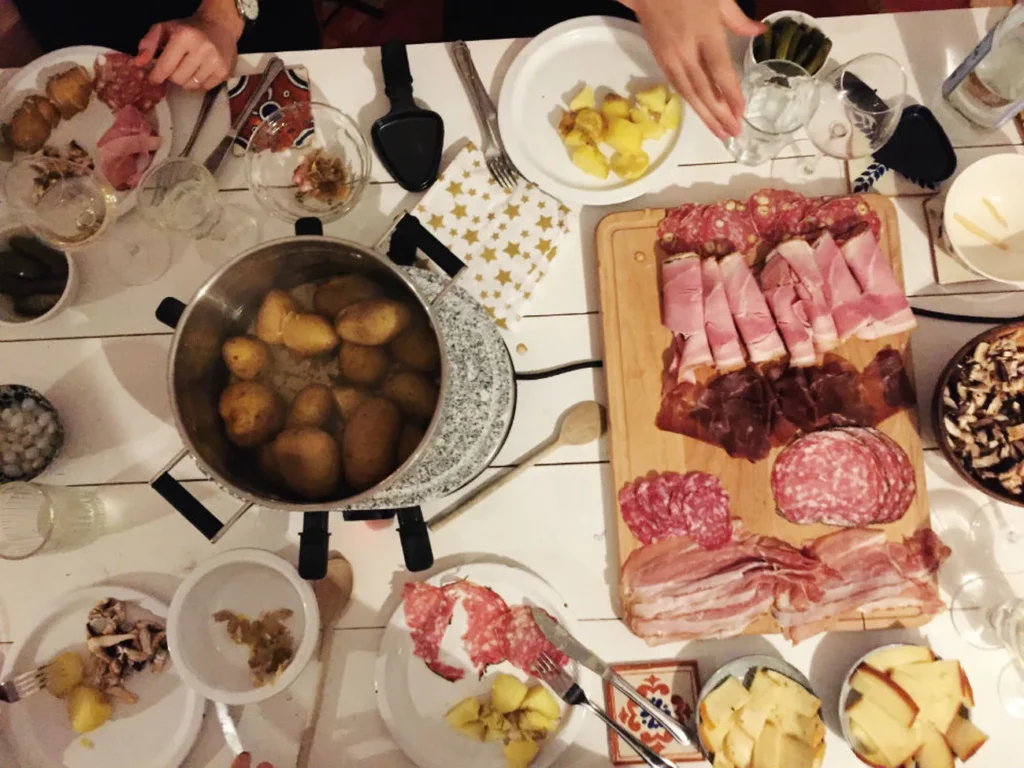
Raclette is both a cheese and a method. The cheese is melted under a heat source and scraped directly onto boiled potatoes, charcuterie. Pickles. The name comes from the French verb racler, to scrape. The social format of a raclette dinner. Each person melting their own portion, is one of the most convivial ways to eat in France and one that students consistently enjoy.
Crepes Bretonnes
The crepe originates from Brittany, where wheat flour crepes have been made since the 13th century. The savory buckwheat version, called a galette, filled with ham, cheese. Egg, is the more traditionally Breton of the two. A creperie in Brittany or one of the many Breton creperies in Paris provides an affordable. Participatory meal that connects directly to the regional culture.
Fromages de France
France has more than 1,600 distinct named cheeses. The regional diversity is a map of the agricultural geography. The creamy Camembert of Normandy, the blues of Auvergne, the hard mountain cheeses of Comte and Beaufort. A cheese course at a French restaurant is an introduction to the agricultural geography of France that no classroom module can replicate. Our France: Cultural Tour ensures groups eat regionally throughout the itinerary.
Boeuf Bourguignon
Beef braised slowly in Burgundy red wine with pearl onions, mushrooms. Lardons is one of the defining dishes of French classical cuisine. In Burgundy itself, ordering boeuf bourguignon in Dijon or Beaune is a direct encounter with the terroir-based cooking philosophy that connects a dish to the specific land and agricultural tradition of the place it comes from. For French language students, the dish is also a vocabulary lesson connecting directly to French cultural identity.
Tarte Tatin
The tarte Tatin is an upside-down caramelised apple tart, one of the most frequently cited examples of how French culinary tradition incorporates accident and improvisation into the canon. According to food legend, the Tatin sisters invented it accidentally at their hotel in Lamotte-Beuvron in the late 19th century. It is a standard offering at brasseries across France and reliably works for student groups.
Prometour builds fully private, custom school group tours to France for French language, art history. History programmes. Every itinerary includes meals at restaurants selected for their regional character. Browse theFrance: Cultural Tour, France: D-Day and USA Tour. Or France: Art Tour to see what a customised French itinerary looks like. The curriculum connections and logistical support available make this one of the most rewarding programmes to build.