





QuebecCanadaHistoryArt & ArchitectureNovember 14, 2018 | 3 min read
Discover Canada’s Native Heritage on Your Next School Trip to Québec
An Indigenous heritage Quebec trip can help students understand First Nations history, culture, traditions, and contemporary life through direct interpretation. The strongest visits centre community voices and respectful learning. The details covered above give teachers a foundation for building an itinerary that delivers real educational outcomes.
” referring to the narrows of the St. Lawrence at the site where Québec City now stands. The Indigenous roots of Canada run through the country’s geography, its place names. The 617 First Nations communities that remain across the country, 39 of them in Québec.
The name “Canada” is believed to come from the Huron-Iroquois wordkanata, meaning village or settlement.
The name “Québec” comes from the Algonquin wordkébec, meaning “where the river narrows.
For teachers covering Indigenous history and contemporary reconciliation as part of the curriculum. Québec offers some of the most accessible and substantive First Nations cultural experiences in Canada. Finding ways to lower the cost of a school trip is the most common challenge teachers face when planning international travel.
How an Indigenous Heritage Quebec Trip Supports Learning
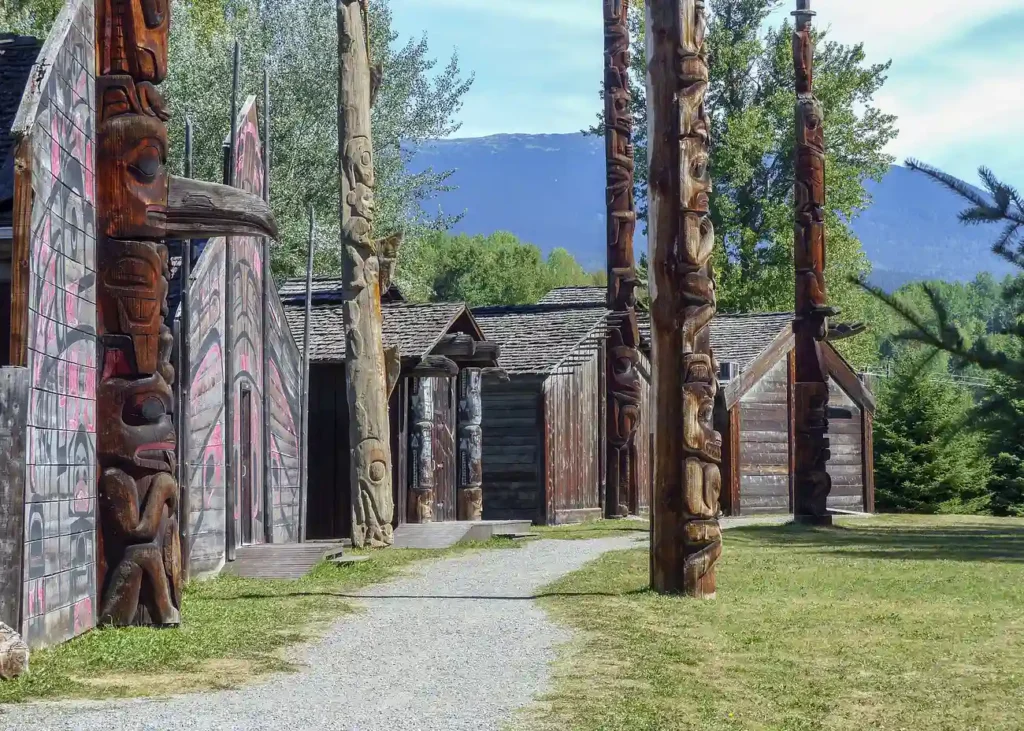
The Wendake reservation and cultural centre, 15 kilometres north of Québec City, is the home of the Huron-Wendat Nation. One of the First Nations whose ancestral territory encompasses the region where the city of Québec dates to. The Huron-Wendat people were among the most significant Indigenous nations encountered by French explorers and missionaries in the 17th century.
Their history is intertwined with the earliest decades of French colonial settlement in North America. The reconstructed traditional village at Wendake gives students a guided encounter with Huron-Wendat material culture and daily life, both historical and contemporary. The longhouse tour, led by Wendat community members in traditional dress, covers the architecture, social organisation.
Seasonal practices of the Wendat people. Students can sit in a handmade birchbark canoe, step inside a sweat lodge. Attend a traditional dance performance. The natural medicine workshop covers the medicinal uses of plants that the Wendat cultivated and gathered in the forests of the St.
Lawrence Valley, a topic that connects directly to biology and environmental science curricula. For teachers covering Indigenous history, the relationship between First Nations and French colonial settlers. Or contemporary reconciliation as part of the curriculum, Wendake is significant for what it shows about the present, not only the past.
A living community that has maintained cultural continuity and territorial sovereignty while adapting to contemporary economic and social realities. The community members who lead the tours speak from inside that reality. Gives the visit a directness that a museum exhibit cannot replicate. Our Ottawa, Montréal and Québec City Tour includes a Wendake visit as a standard component.
The Pointe-à-Callière Museum, Montréal
The Pointe-à-Callière Museum in Old Montréal is built directly on the site of the city’s founding and takes students underground through the full sequence of human occupation of the island. Beginning with the Hochelaga Iroquoian village that existed at the site before European contact. The archaeological layers visible in the museum’s underground circuit, from Indigenous settlement through French colonial occupation and British rule.
Provide a physical demonstration of the relationship between Indigenous and European histories at the place where Montréal stands. For social studies and history teachers, this continuity of occupation. The fact that Montréal exists on land that has been continuously inhabited for centuries before the French arrived. Is a curriculum point that the museum makes concrete and visible.
The Musée McCord Stewart, Montréal
The Musée McCord Stewart in Montréal holds one of the most significant collections of Indigenous material culture in eastern Canada. Particular strength in Haudenosaunee (Iroquois), Wendat, Algonquin, Inuit. Métis collections. The museum’s ongoing programmes include exhibitions that engage directly with contemporary Indigenous communities and present First Nations perspectives on the history and culture represented in the collection.
For teachers looking for a museum experience that goes beyond a colonial-era presentation of Indigenous cultures as historical artefact. McCord’s contemporary programming makes it a more substantive choice than many comparable institutions.
Curriculum Connections
An Indigenous heritage component in a Québec student trip connects directly to social studies and history curricula covering the pre-contact history of North America. The era of French and British colonisation, the relationship between First Nations and European settlers. The impact of residential schools and other assimilationist policies.
The contemporary process of reconciliation between Indigenous communities and the Canadian state. The Truth and Reconciliation Commission’s 94 Calls to Action, adopted in 2015, explicitly include education among the areas where change is required. Makes the study of Indigenous history not only a curriculum obligation but a civic one.
For teachers in Canadian schools in particular, this content is now a mandated part of the history and social studies curriculum in most provinces. Québec provides an unusually accessible set of field experiences to support it.
A Note on Respectful Engagement
When taking students to Indigenous cultural sites, preparation matters. Students who arrive at Wendake knowing something about the history of the Huron-Wendat Nation. Their role in the fur trade, their relationship with French missionaries. The contemporary status of their reservation engage more meaningfully with what they encounter.
A preparatory classroom unit covering the pre-contact history of the site, the impact of colonisation. The concept of cultural continuity gives students the framework to understand what they are seeing as a living reality rather than a historical display. It also gives them the courtesy of informed engagement. The community members who lead the tours deserve.
Prométour includes Indigenous cultural experiences at Wendake and the Pointe-à-Callière Museum as standard components of its Québec City and Montréal itineraries. Browse theOttawa, Montréal and Québec City Touror the Bonjour Québec: Spring Journey to see how Indigenous heritage fits into a broader Québec itinerary. The curriculum connections and logistical support available make this one of the most rewarding programmes to build.
When planning a lower the cost of a school trip. The details covered above give teachers a foundation for building an itinerary that delivers real educational outcomes.