














FranceArt & ArchitectureFrenchHistoryJune 26, 2026 | 4 min read
Chartres Cathedral Art Project for Students
A Chartres Cathedral art project can connect Gothic architecture, visual storytelling, geometry, history, and student design. A Chartres Cathedral art project gives students a practical way to study Gothic architecture before or after visiting France. The cathedral’s stained glass, sculpture, geometry, and spatial design provide rich material for observation and interpretation. By creating their own window or architectural proposal, students move from identifying features to making purposeful artistic choices.
Quick answer: Prométour plans private, custom art and architecture student trips in France that are built around one class and one set of learning goals, so the itinerary, group size, and academic focus fit what a teacher actually needs.
Begin With the Building’s Purpose
Before discussing style, ask students what a medieval cathedral needed to accomplish. It served religious, civic, educational, and symbolic functions. The scale, imagery, and light communicated ideas to visitors with different levels of literacy. This helps students understand that design decisions were connected to audience and purpose.
Study Gothic Structure
Introduce pointed arches, ribbed vaults, flying buttresses, vertical emphasis, and large stained-glass openings. Students can annotate photographs and explain how each feature affects height, light, or structural support. A simple paper engineering activity can demonstrate why external supports allow walls to contain larger windows.
Read the Stained Glass as Visual Storytelling
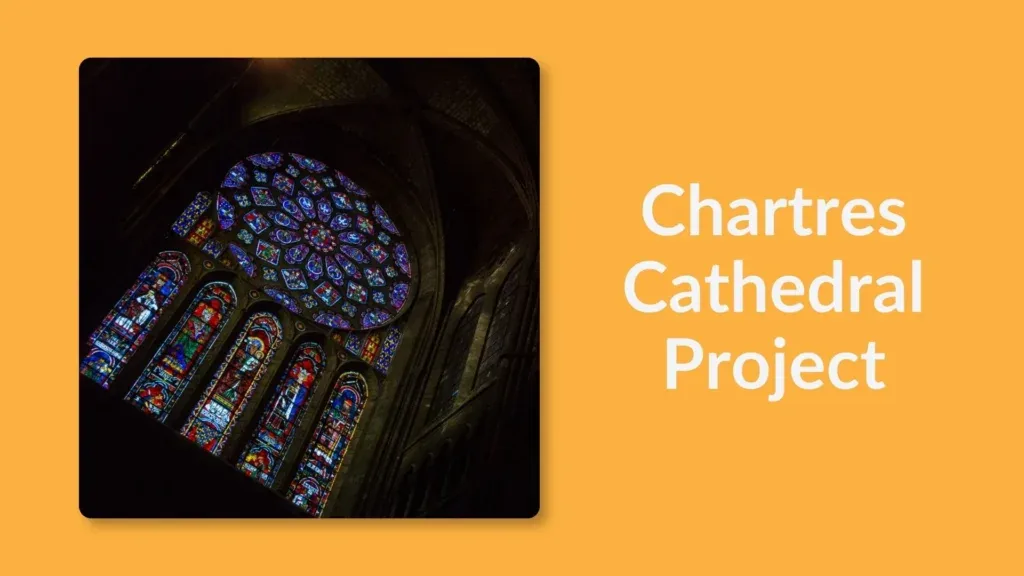
Chartres is renowned for its medieval stained glass. Students can examine how colour, repeated shapes, borders, figures, and sequence guide the viewer. Ask them to identify a central message and the visual evidence supporting their interpretation. This reinforces the idea that images can function like organized texts.
Create a Cathedral Window Design
Students can design a window around a theme from the curriculum, school community, or local history. Require a focal image, symbolic colour choices, repeated geometric elements, and a border. Tissue paper, acetate, collage, or digital illustration can reproduce the effect of transmitted light without imitating historic imagery too literally.
Add Mathematics and Geometry
Rose windows provide a natural connection to symmetry, rotation, proportion, and radial design. Students can construct a circular framework with compasses or digital tools before adding imagery. Art and mathematics teachers can assess different elements of the same project, making the activity useful for interdisciplinary learning.
Connect the Project With France
A visit allows students to compare photographs with the experience of scale, acoustics, light, and movement through the building. Prométour’s France: Art Tour can be adapted to connect Chartres with museums, architecture, and hands-on art activities elsewhere in France.
Finish With an Artist Statement
Ask students to explain their intended audience, symbols, colour choices, and structural references. An artist statement makes the assessment less dependent on technical skill and reveals whether students understood the relationship between form and meaning. Displaying the finished windows together can also recreate the collective visual impact of a larger architectural space.
Prométour creates private, customized educational tours around each teacher’s objectives. Explore the France: Art Tour or browse more learning opportunities through our educational tour programs.
Begin With Visual Evidence
A Chartres Cathedral art project should begin with close observation rather than a summary of Gothic architecture. Give students high-resolution details of windows, portals, floor plans, and sculptural figures. Ask them to record repeated shapes, colour relationships, gestures, and symbols before explaining what those details may communicate.
This process helps students understand that medieval visitors did not experience the cathedral as a list of architectural terms. They encountered an environment designed to guide movement, attention, and belief. The art project should therefore consider how separate elements work together.
Combine Geometry With Storytelling
Students can design a stained-glass panel within a geometric framework. The challenge is to organize a narrative using limited space, repeated shapes, and a controlled colour palette. Mathematics students can examine symmetry and proportion, while history or religion students focus on audience and symbolism.
Require an artist statement that explains both the visual choices and the intended message. A France: Art Tour can include Chartres so students can compare their designs with the building’s actual relationship between structure, light, and storytelling.
For background research, teachers can consult official sources such as UNESCO World Heritage Centre and the Louvre.
Frequently asked questions
What grade levels are France student trips suitable for?
Because Prométour builds every itinerary privately for a single group, the pacing and content are set to match the class, from middle-school groups to senior students. A teacher shapes the academic focus, so the same route can serve a beginner art and architecture class or an advanced one.
How far ahead should teachers plan France student trips?
Most group leaders start nine to twelve months out, which leaves room to confirm dates, fundraise, and align the route with the curriculum. You can request a custom quote and a draft itinerary early, then adjust it as enrolment settles. See the trip page for a starting point.
How is a private group trip different from an off-the-shelf tour?
A private itinerary is built around one class rather than pooled with strangers, so the schedule, academic focus, and group size fit the teacher’s goals. That control is the core of how Prométour works.
Bringing it into the classroom: the strongest France trips start from a clear curriculum goal, not a checklist of sights. Decide what you want students to understand in your art and architecture unit, then let the itinerary serve that goal. A private, custom plan makes that alignment possible, and you can shape it directly on the trip page.