








Morocco: The French-Speaking World Beyond Europe
Ask most students where French is spoken and they will name France, maybe Quebec. Few will name Morocco, which is exactly why a trip there is so useful for a French class. French is spoken widely across the country, in business, media, and education, alongside Arabic and Amazigh, the Berber language.
That layering is the lesson. Morocco shows students that French is a world language, carried into markets, classrooms, and conversations far from Paris. A class travels and explores it together, through imperial cities, ancient medinas, and mountains that look like nowhere else on their itinerary.
Where French meets Arabic and Amazigh
Part of what makes Morocco valuable for a French program is that French is not the only language in the room. Students hear it used naturally, then hear it give way to Arabic or Amazigh, and they begin to understand French as one thread in a multilingual society rather than a single national code. Using their French to be understood in a Moroccan market or café is a confidence builder precisely because it is unexpected.
The imperial cities, layer by layer
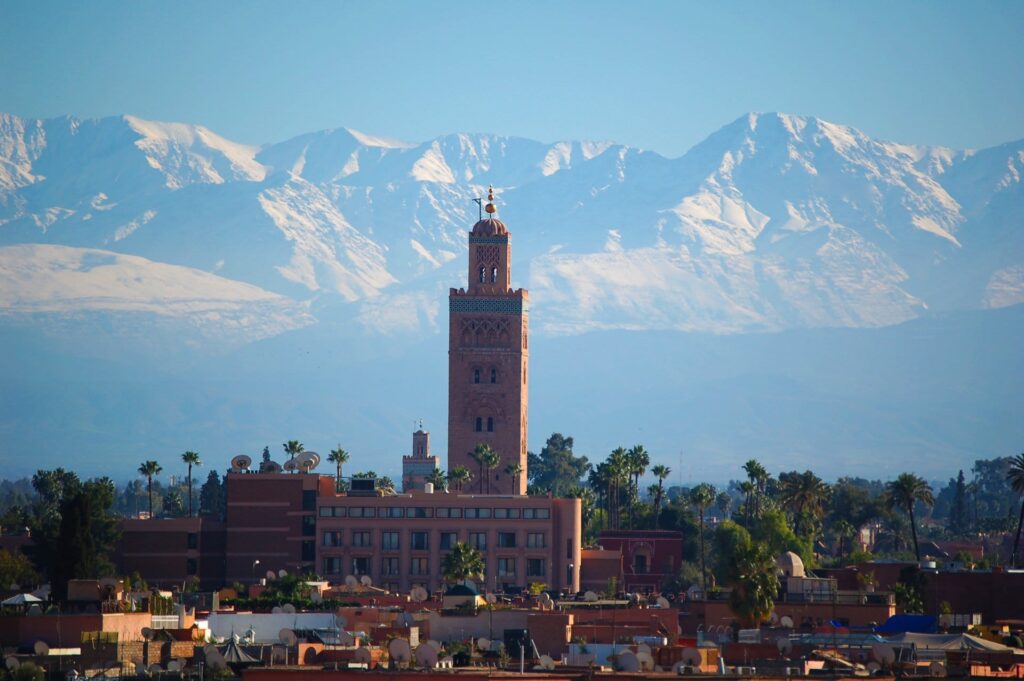
Morocco’s history is written into its cities, and both itineraries move a group through them in sequence. The Morocco Highlights and Atlas Mountains tour begins in the capital, Rabat, then continues to Meknes and the Roman ruins of Volubilis before reaching Fez. There, the Fes El Bali medina, a UNESCO World Heritage site, is a maze of a place where students can see one of the world’s oldest universities and walk streets that have changed little in centuries. The route ends with the Djemaa El Fna square in Marrakesh and the Hassan II Mosque in Casablanca, the largest in Africa. Standing in each city, students feel the difference between a place they read about and a place they can navigate.
Craft traditions students can watch up close
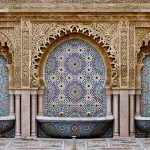
Fez is also where students see how things are made. In the souks, Fassi craftsmanship is on open display, from the leather tanneries to ceramics and textiles, work passed down through generations. On the Morocco Highlights and Desert Adventure tour, a Moroccan cooking class in Marrakesh turns that hands-on spirit toward the kitchen, giving students a direct, tactile way into the culture and a good deal of new vocabulary along the way.
Into the Atlas and the desert
Morocco is not only its cities. The Atlas route travels into the mountain valleys around Imlil and Asni, with a camel ride and a tea ceremony in a Berber village, an encounter many students remember as the trip’s high point. The desert route goes further, into the Agafay Desert for a camel excursion, a traditional dinner, and a campfire under a sky full of stars, with an overnight at a desert camp. These are the settings that make Morocco feel like genuine discovery rather than a checklist, and they are shared as a group.
Why it works for a French class
Morocco stretches a French program in the best way. It shows students that the language they are studying opens doors well beyond Europe, and it does so through history, craft, and landscape that hold their attention. Back in class, students can research how French came to be so widely spoken in Morocco, compare a Moroccan market to a French one, or present the story of one city they visited, and the trip becomes a springboard for a whole unit on the wider French-speaking world.
For a French program ready to look beyond Europe, Morocco is a memorable and genuinely different choice. The Morocco Highlights and Atlas Mountains tour pairs the imperial cities with mountain villages, while the Morocco Highlights and Desert Adventure tour trades the Atlas for a night in the desert. You can find both among our French-language options on the French tours page. Every group travels privately, never combined with another school, and payments are held in trust and fully refundable until you confirm, so you can explore the idea with your class before committing to anything.