












The Paris Catacombs: An Educational Visit Beneath the City
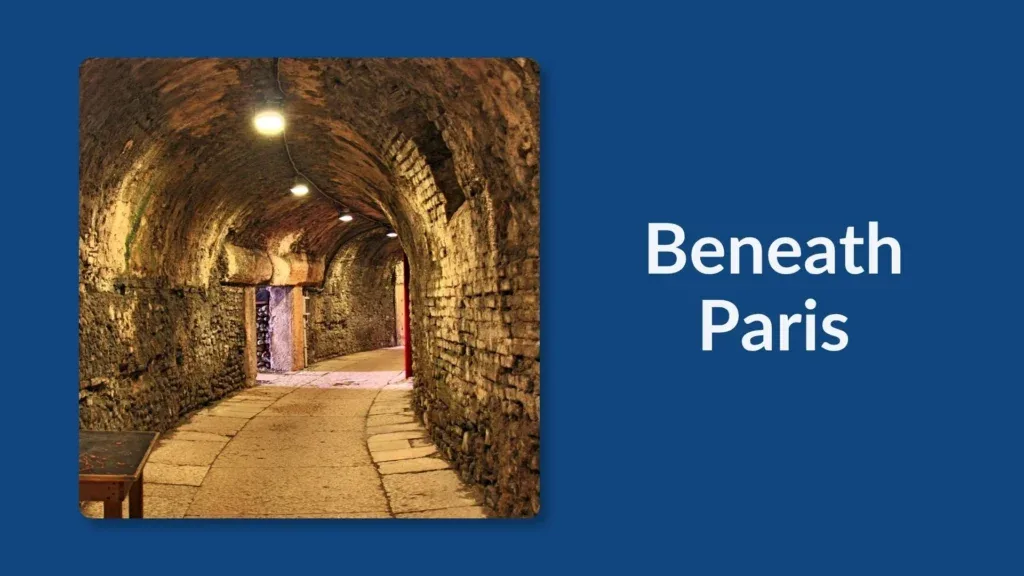
A Paris Catacombs student visit introduces a side of the city that contrasts sharply with its monumental boulevards and museums. The underground ossuary contains the remains of millions of people transferred from overcrowded cemeteries beginning in the late eighteenth century. For students, the site can support learning about urban growth, public health, geology, memory, and the ethical responsibilities of visiting places associated with death.
Quick answer: Prométour plans private, custom student trips in France that are built around one class and one set of learning goals, so the itinerary, group size, and academic focus fit what a teacher actually needs.
A Paris Catacombs student visit introduces a side of the city that contrasts sharply with its monumental boulevards and museums. The underground ossuary contains the remains of millions of people transferred from overcrowded cemeteries beginning in the late eighteenth century. For students, the site can support learning about urban growth, public health, geology, memory, and the ethical responsibilities of visiting places associated with death.
Why Paris moved human remains underground
By the eighteenth century, several Paris cemeteries had become severely overcrowded and created public-health concerns. Authorities began transferring bones into former limestone quarries outside the city’s built-up centre.
This history helps students examine how governments respond when infrastructure, population growth, and health collide. It also shows that famous urban spaces are shaped by difficult practical decisions.
The quarries reveal the geology beneath Paris
Long before the ossuary was created, limestone was extracted from underground quarries and used to build parts of the city above. The Catacombs therefore connect architecture to geology and resource use.
Students can consider how extraction creates long-term consequences. Quarry instability later required mapping, reinforcement, and regulation, adding another layer to the story of urban planning.
Human remains require respectful interpretation
The Catacombs are visually striking, but they are not simply a dramatic attraction. Teachers should prepare students to understand that the bones belonged to individuals and that behaviour, photography, and commentary should reflect that reality.
This creates an opportunity to discuss memorialization. Why are remains arranged in this way? How does the site balance education, tourism, preservation, and dignity?
Connecting the underground site to modern Paris
A visit can be paired with study of population growth, sanitation, cemeteries, architecture, or the transformation of Paris in the nineteenth century. Students can compare the hidden infrastructure below the city with the public image above it.
Because access involves stairs, narrow passages, and specific visitor rules, teachers should also evaluate mobility needs and group suitability carefully before including the site.
The Catacombs Connect Death, Health, and Urban Growth
A Paris Catacombs student visit can support history, urban geography, public health, and ethics. The transfer of human remains from overcrowded cemeteries was connected to sanitation concerns and the pressures of a growing city. The underground quarries also reveal how construction above ground depended on geology below it.
The site should not be presented only as macabre entertainment. Students need context about the people whose remains are displayed and the choices involved in turning an ossuary into a public attraction.
Prepare Students for the Ethical Dimension
Ask what respectful behaviour looks like and who has the authority to interpret human remains. Students can compare the Catacombs with memorials, cemeteries, or museum collections elsewhere. This shifts attention from shock toward questions of dignity, memory, and the public use of the dead.
The Catacombs are most valuable when treated as a serious historical site and connected to the larger story of how Paris developed. France: History of the French Monarchy to the French Revolution offers a practical starting point, and the France history tours page can help you compare related options.
The Catacombs Connect Public Health, Urban Growth, and Memory
The site becomes more meaningful when students understand why the remains were moved underground. Overcrowded cemeteries, public-health concerns, quarry networks, and rapid urban growth all contributed to the creation of the ossuary. The visit therefore links architecture, geology, governance, and social history.
Because the setting can be emotionally intense, teachers should frame the visit around respectful observation. Students can reflect on how societies manage human remains and how the design of a memorial affects the way visitors respond.
What Students Should Notice
For teachers, the experience becomes most valuable when students know what evidence to look for and how the experience connects to work already completed in class. A focused question, a short observation task, and a purposeful discussion afterward can turn the topic into learning that students can explain in their own words.
For another teacher-focused perspective, read Hidden Gems in France for Educational Student Tours.
For background research, teachers can consult official sources such as the official Paris Catacombs museum and UNESCO World Heritage Centre.
Frequently asked questions
What grade levels are France student trips suitable for?
Because Prométour builds every itinerary privately for a single group, the pacing and content are set to match the class, from middle-school groups to senior students. A teacher shapes the academic focus, so the same route can serve a beginner language class or an advanced one.
How far ahead should teachers plan France student trips?
Most group leaders start nine to twelve months out, which leaves room to confirm dates, fundraise, and align the route with the curriculum. You can request a custom quote and a draft itinerary early, then adjust it as enrolment settles. See the trip page for a starting point.
Are meals part of the learning, and can dietary needs be met?
Yes. Shared meals are treated as cultural lessons rather than simple stops, and private group planning means dietary restrictions are arranged in advance with local partners.
Bringing it into the classroom: the strongest France trips start from a clear curriculum goal, not a checklist of sights. Decide what you want students to understand in your unit, then let the itinerary serve that goal. A private, custom plan makes that alignment possible, and you can shape it directly on the trip page.