



QuebecFrenchHistoryArt & ArchitectureOctober 22, 2020 | 3 min read
City Essentials: Quebec City
A Quebec City student trip brings French language, Canadian history, architecture, and culture together in a compact, walkable destination. These essential stops help teachers build a balanced itinerary without sacrificing depth. The details covered above give teachers a foundation for building an itinerary that delivers real educational outcomes.
Québec City has been continuously settled for over 400 years. Its Old Town is the only remaining fortified city in North America north of Mexico. For student groups, the density of history, architecture. French-language culture within a walkable area makes it one of the most efficient educational destinations on the continent.
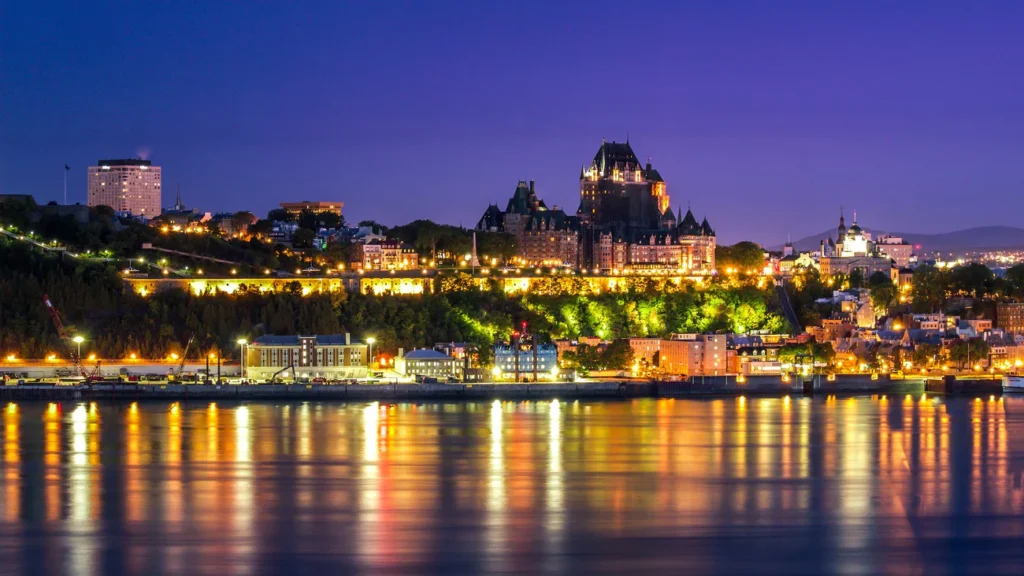
Here are the essentials. The best places to visit in Quebec City for students connect 400 years of French colonial history to a fully immersive French-language experience.
Why a Quebec City Student Trip Works So Well
Quartier Petit-Champlain is one of the oldest commercial streets in North America. Tucked below the cliff of Old Québec in the Lower Town. The neighbourhood dates to the 17th century. Samuel de Champlain established the first permanent French settlement in North America nearby. Today the quarter is a compact district of stone buildings, boutiques, galleries, restaurants.
Cultural spaces that has preserved the architectural character of New France while remaining a genuinely active neighbourhood rather than a museum piece. Students can visit the site of Champlain’s first residence, the Notre-Dame-des-Victoires church (built in 1688. The oldest stone church in North America). Ride the funicular up the cliff face to the Upper Town for a view of the St.
Lawrence below. The funicular has operated since 1879, making it one of the oldest cable-operated funiculars in North America. For French immersion students, Quartier Petit-Champlain is fully French-speaking and genuinely navigable on foot. Making it an ideal setting for an independent afternoon exercise. Our Ottawa, Montréal and Québec City Tour includes time in the Lower Town.
The Plains of Abraham
The Plaines d’Abraham are among the most historically significant sites in Canada. On September 13, 1759, a fifteen-minute battle fought on this ground effectively ended French colonial rule in North America. General Wolfe’s British forces defeated General Montcalm’s French defenders in an engagement that determined which European power would shape the future of the continent.
Both commanders died of wounds received in the battle. Gives the Plains a particular quality of historical weight: this is not a place where one side simply won. The site is now a large public park managed by the National Battlefields Commission, with a museum, interactive programmes.
Walking trails covering the military history of the site from the Seven Years’ War through the First World War. TheSoldats de la tour Martellointeractive workshop, offered to school groups. Places students in the physical context of the site with guided hands-on activities that connect directly to the history curriculum.
The Fortified City Walls
Québec City is the only city in North America north of Mexico still enclosed by its original fortification walls. The 4.6-kilometre circuit of walls, first constructed by the French in the late 17th century and substantially reinforced by the British after 1759. Can be walked in approximately two hours.
Within and along the walls are the Citadelle (still an active military installation. Home to the Royal 22e Régiment), the Porte Saint-Louis, the Porte Saint-Jean. A series of bastions and guardhouses from different periods of the fortifications’ history. The walls themselves are a primary source in stone.
Each section reflects the military priorities and architectural practices of the era that built it. For history and architecture students, walking the full circuit with a guide who can read the construction history in the masonry is one of the most substantive single experiences available in Québec City.
The Château Frontenac
The Château Frontenac dates to between 1893 and 1924 on the site of the former official residence of the governors of New France, overlooking the St. Lawrence from the cliff above the Lower Town. It is consistently recognised as the most photographed hotel in the world, a claim backed by the Guinness World Records.
The hotel served as the site of the Québec Conferences of 1943 and 1944. Winston Churchill and Franklin Roosevelt met with Canadian Prime Minister William Lyon Mackenzie King to coordinate Allied strategy in the final years of WWII. For history teachers, the building connects directly to the WWII curriculum.
For French language teachers, its location at the centre of Old Québec and its visual dominance of the cityscape make it a natural landmark around which a walking tour can be organised. The Terrace Dufferin, the boardwalk that runs along the cliff in front of the hotel. Offers one of the best unobstructed views of the St. Lawrence available in the city.
Montmorency Falls
Located 10 kilometres east of the city centre, Montmorency Falls drops 83 metres toward the St. Lawrence River, making it approximately 30 metres higher than Niagara Falls. Groups can approach the falls from several angles by taking the cable car, climbing the 487-step staircase, or crossing the suspension bridge above the crest.
A series of lookout points at different elevations. In winter, the mist from the falls builds a large ice cone at the base.
Called thepain de sucre.
Local ice climbers ascend on weekends. The surrounding Parc de la Chute-Montmorency has picnic areas, cycling paths, and historical significance. The manor house at the top served as as the summer residence of the Duke of Kent, father of Queen Victoria. Later as a headquarters for British General James Wolfe during the siege of Québec in 1759.
Wendake: The Huron-Wendat Territory
The Wendake territory, 15 kilometres north of Québec City, is the reservation and cultural centre of the Huron-Wendat Nation. One of the First Nations whose ancestral territory encompasses the region where Québec City stands. A visit to the reconstructed traditional village gives students a guided encounter with Huron-Wendat history.
Material culture, and contemporary community life. Students can tour the longhouse, attend a traditional dance performance, participate in a natural medicine workshop. Speak with Wendat community members about the history of the nation. For teachers covering Indigenous history, the relationship between First Nations and French colonial settlers. Or contemporary Indigenous community life as part of the curriculum.
Wendake is one of the most accessible and substantive experiences available in Eastern Canada. Our Québec City Winter Carnival Tour and most other Québec itineraries include a Wendake visit.
The Carnaval de Québec
The Carnaval de Québec, held each February, is the largest winter carnival in the world. The festival traces its origins to the traditions of French colonists who gathered to eat and celebrate before Lent. Its modern form opened in in 1955. Events include ice canoe races across the partially frozen St.
Lawrence, ice sculpture competitions, a night parade, outdoor concerts. The Ice Palace, rebuilt from scratch each year at a new location with a new theme. Bonhomme Carnaval, the seven-foot snowman who serves as the carnival’s official representative. Has led the celebrations since 1955 and is a figure of genuine cultural significance in Québec.
For French immersion students, the carnival provides a fully immersive, festive, French-speaking environment in which language practice feels natural rather than instructional. OurQuébec City Winter Carnival Touris built specifically around the festival.
Prométour is based in Montréal and has been building Québec City school group tours for over three decades. Browse theOttawa, Montréal and Québec City Tour, theQuébec City Winter Carnival Tour. Or the Bonjour Québec: Spring Journey to find the right fit for your group. The curriculum connections and logistical support available make this one of the most rewarding programmes to build.
When planning a best places to visit quebec city students. The details covered above give teachers a foundation for building an itinerary that delivers real educational outcomes.