



















CanadaMarch 29, 2017 | 6 min read
8 Reasons Why Every Student Should Learn Another Language
Student language learning benefits reach far beyond vocabulary tests and final grades. Another language can strengthen communication, cultural awareness, confidence, academic skills, travel experiences, and future career options. Making that case to a fifteen-year-old choosing electives requires something more than data. Here are eight reasons that language teachers and educators across North America have found genuinely effective.
Arguments grounded in cognitive science, professional reality, cultural access. The kind of direct human experience that a class trip makes possible. The reasons to learn Spanish go well beyond grades. Students respond to arguments that connect the language to the real world.
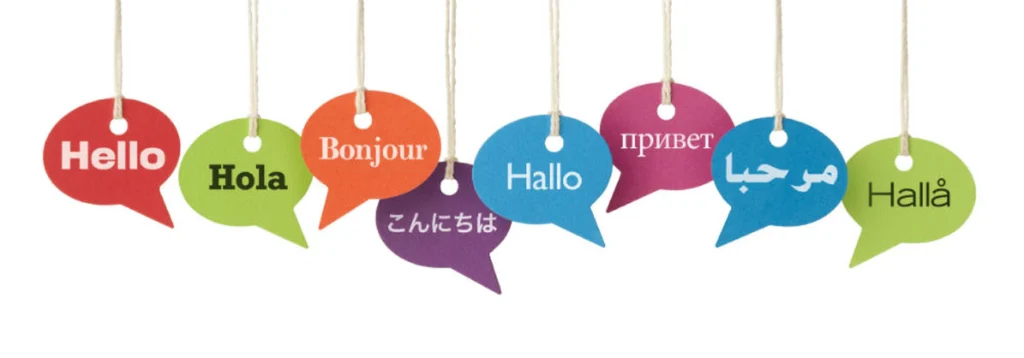
Why Student Language Learning Benefits Last Beyond School
Learning a language means learning the way a community sees the world. Vocabulary, idiom, grammar, and cultural reference are not just communication tools: they are the architecture of a worldview. A student learning Spanish who visits Mexico, the Dominican Republic. Spain in the same year encounters three different versions of the language, shaped by three different histories, geographies.
Cultural contexts. That kind of nuanced awareness, understanding that the world is not a single thing experienced differently by different people but genuinely different things. Is one of the most valuable outcomes of language education. It is also, consistently, what language teachers say they most want their students to develop.
2. It Makes You Stand Out Professionally
Bilingualism is a professional advantage in almost every sector. The demand for bilingual employees continues to grow across healthcare, law, education, government, social services, business. Technology. In Canada, French-English bilingualism opens federal government positions and significantly broadens the range of public and private sector roles available.
In the United States, Spanish-English bilingualism is increasingly valued in most major metropolitan areas. Students who reach functional fluency before entering the workforce arrive with a genuine differentiator that most of their peers do not have and cannot quickly acquire.
3. It Improves Performance in Other Subjects
Research consistently shows that language learners develop stronger analytical and reading skills across all subjects. Learning a second language requires students to think explicitly about grammar, syntax. Meaning in ways that native speakers rarely do, and this metalinguistic awareness transfers to better reading comprehension, writing.
Critical thinking in the first language. Students who study a foreign language also tend to perform better on standardised tests in reading and mathematics than those who do not. Even controlling for other variables. For students hesitant about taking a language class, this cross-subject benefit is a concrete and well-documented argument.
4. It Builds Cognitive Resilience
The research on bilingualism and brain health is now extensive. Bilingual individuals consistently demonstrate stronger executive function, including better attention control, task-switching ability. Working memory, compared to monolinguals. Long-term studies have found that bilingualism delays the onset of dementia by an average of four to five years.
The brain benefits are dose-dependent: the earlier the second language is acquired and the more consistently it functions as. The more significant the effect. For students who are weighing the time investment of a language class against other demands on their schedule. The cognitive benefits are a compelling argument for staying with it.
5. It Makes You a Better Traveller
Students who travel to a country where they speak the language, even at a functional rather than fluent level. Have a fundamentally different experience than those who do not. They can navigate independently, interact with local people outside of tourist transactions, understand what is being said around them.
Access parts of a destination that non-speakers simply cannot reach. The difference between a trip where you are permanently dependent on guides and translators and a trip where you can find your own way through a neighbourhood. Order from a menu written only in the local language.
Have a genuine conversation with someone who is not being paid to speak to you. Is the difference between tourism and travel. A class trip to a destination where students use the language they have been studying tends to be one of the most powerful arguments for continuing with that language after the trip.
6. It Connects You to a Wider Literary and Cultural World
Every major language is the vehicle of a substantial literary, artistic, and cultural tradition. French gives students access to Proust, Camus, and Voltaire without translation. To contemporary French cinema, music, and journalism. Spanish opens García Márquez, Borges, Neruda, and the entire tradition of Latin American literature.
Well as Spanish film and music. German unlocks Goethe, Kafka, Brecht, and the philosophical tradition of Kant, Hegel. Nietzsche. These traditions are meaningful in their original language in ways that translation, however good, cannot fully capture. Students who acquire a language gain access to that tradition as a living thing, not an archived one.
7. It Makes You More Empathetic
Learning a language is a sustained exercise in being a beginner, in making mistakes, in being misunderstood. In the effort required to communicate across a gap. Students who have had that experience consistently describe it as having changed how they relate to people who are learning English as a second language.
The direct experience of struggling to express something you understand perfectly but cannot yet say in another language builds a specific kind of empathy that abstract instruction about diversity and inclusion does not. Several educators across North America describe this as one of the most significant and least-discussed outcomes of language education.
8. It Is More Accessible Than It Has Ever Been
The tools available for independent language study, from structured apps like Babbel and Duolingo to podcast platforms like GermanPod101 and FrenchPod101. To platforms connecting learners with native speakers for conversation practice. Have made maintaining and extending language skills outside the classroom easier and cheaper than at any previous point in history.
The classroom is now the foundation rather than the totality of a student’s language exposure. Teachers who direct students toward these tools effectively can accelerate progress significantly between class sessions. And when a class trip places students in the destination country, all of that preparation pays off in a week of immersive.
Real-world language use that consolidates months of classroom work. Prométour offers French immersion trips to France and Québec, Spanish immersion trips to Spain and Costa Rica. German immersion trips to Germany and Austria, each privately organised and built around your programme.
The fastest way to consolidate language learning is a class trip to the destination. Prométour builds fully private, custom school group tours for French, Spanish, German. Italian programmes. Browse trips toFrance,Spain, orGermanyto see what an immersion trip could look like for your class.