

















8 Italian Dining Tips for Student Travelers
These Italian dining tips for students help teachers prepare groups to understand meals as part of the cultural experience, not simply a break between activities. Italian dining is one of the most memorable parts of a student trip, but it can also be one of the first moments when students realize that familiar routines do not apply everywhere. Meal timing, course structure, service, and expectations around food may differ from what they know at home.
Preparing students in advance reduces anxiety and turns every meal into a cultural lesson. These Italian dining tips help groups approach food with curiosity, respect, and enough practical knowledge to participate confidently.
Quick answer: Prométour plans private, custom Italian student trips in Italy that are built around one class and one set of learning goals, so the itinerary, group size, and academic focus fit what a teacher actually needs.
Italian dining is one of the most memorable parts of a student trip, but it can also be one of the first moments when students realize that familiar routines do not apply everywhere. Meal timing, course structure, service, and expectations around food may differ from what they know at home.
Preparing students in advance reduces anxiety and turns every meal into a cultural lesson. These Italian dining tips help groups approach food with curiosity, respect, and enough practical knowledge to participate confidently.
1. Understand That Dinner Often Starts Later
In many parts of Italy, dinner begins later than students may expect. Restaurants may not feel busy until after 8:00 p.m. Group itineraries usually adapt meal times for students, but explaining the local rhythm helps them understand why cafés, shops, and public spaces remain active well into the evening.
2. Learn the Basic Course Structure
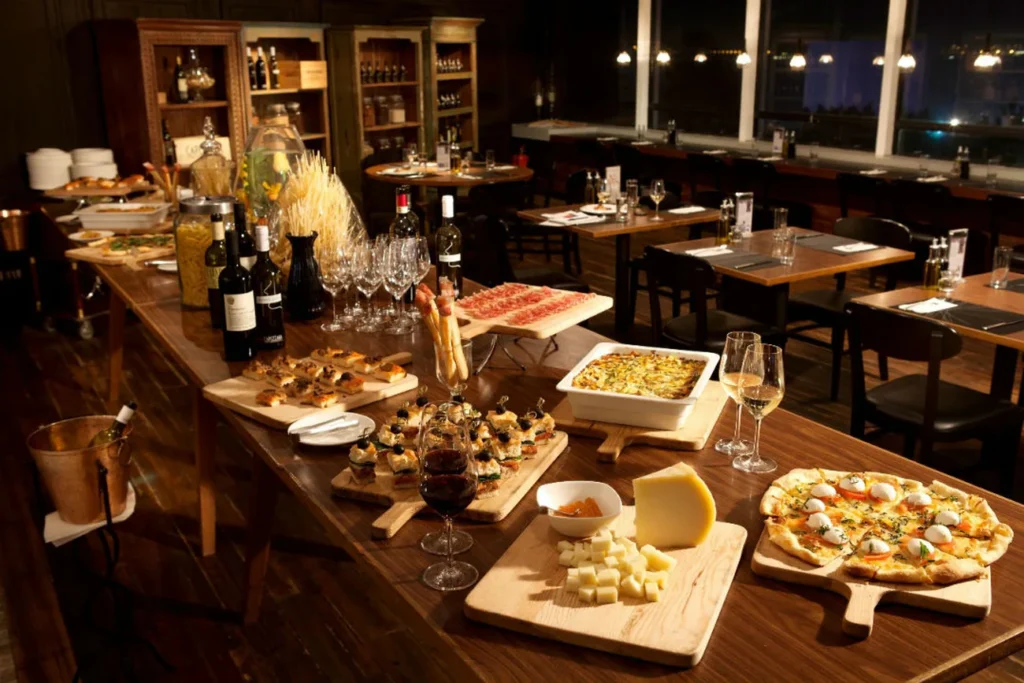
A traditional menu may include antipasti, a primo such as pasta or risotto, a secondo based on meat or fish, contorni, and dessert. Students do not need to order every course. The value is in understanding that pasta is often a first course rather than the entire meal.
3. Expect Strong Regional Differences
Italian food is regional. Risotto and polenta are associated with parts of northern Italy, fresh pasta traditions vary across central regions, and southern cooking often features tomatoes, olive oil, citrus, and seafood. Asking students to track regional dishes creates a useful geography activity.
4. Practice Essential Ordering Language
Even a few phrases make students more willing to interact. Expressions such as “vorrei,” “per favore,” and “il conto” allow them to order politely and request the bill. Teachers can rehearse short restaurant dialogues before departure so students arrive ready to use the language.
5. Explain Water, Bread, and Table Charges
Water is commonly ordered by the bottle as still or sparkling. Some restaurants also include a coperto, a small cover charge associated with table service. Students should understand that these are normal practices rather than surprise fees.
6. Prepare for Allergies and Dietary Needs
Dietary requirements should be communicated to the tour provider before travel. Students should also carry a translated allergy card and know how to describe serious restrictions. Clear preparation allows local restaurants to respond safely and avoids relying on improvised explanations.
7. Encourage Thoughtful Food Exploration
Students do not need to love every dish, but they should be encouraged to taste unfamiliar foods respectfully. A simple rule such as trying one bite before deciding can make meals feel adventurous without creating pressure.
8. Use Meals as Cultural Observation
Ask students to notice who is dining, how long meals last, how people interact with servers, and whether food is shared. These observations reveal ideas about family, leisure, hospitality, and public life that rarely appear in a textbook.
Turning Italian Food Into a Learning Theme
A food-focused assignment can include a regional map, vocabulary journal, menu analysis, or short presentation on the history of one dish. Prométour’s Italy: Food Cultural Tour provides a useful starting point for groups that want cuisine, markets, and regional culture to play a central role in the itinerary.
When students understand the customs behind the meal, dining becomes more than a break in the schedule. It becomes one of the most accessible ways to experience Italian language, geography, and daily life.
Supporting Students Who Are Selective Eaters
Teachers can reduce food-related stress by sharing sample menus and explaining that respectful participation does not require enjoying every dish. Students should know which familiar options are commonly available and how to communicate politely when they cannot eat something.
A short pre-trip tasting activity can help. Introduce olive oil, regional cheese, bread, or a simple pasta dish, then ask students to describe flavor and texture using neutral vocabulary rather than labeling unfamiliar food as strange.
Help Students Read the Social Rules of a Meal
Italian dining is not only about recognizing dishes. Students also need to understand pace, courses, table customs, and the role of the meal as a social event. A restaurant experience becomes less stressful when they know why water may be ordered by the bottle, why bread is not always served with butter, and why a quick meal may still take longer than they expect.
Menus offer a practical language lesson. Students can identify regional ingredients, distinguish a first course from a main course, and practise asking about allergies or dietary needs. Even cautious eaters often become more willing to try something when they understand what it is and how it fits the local meal.
Use Food to Read Regional Italy
Italian dining tips for students should also explain that Italian food is intensely regional. Risotto in the north, Roman pasta traditions, Tuscan soups, Neapolitan pizza, and Sicilian sweets reflect climate, agriculture, trade, and history. Asking students to trace one ingredient across regions turns eating into a form of cultural geography rather than a break from learning.
Questions Worth Exploring With Students
For teachers, the experience becomes most valuable when students know what evidence to look for and how the experience connects to work already completed in class. A focused question, a short observation task, and a purposeful discussion afterward can turn the topic into learning that students can explain in their own words.
For another teacher-focused perspective, read 15 French Dishes That Bring Language and Culture to Life.
For background research, teachers can consult official sources such as UNESCO World Heritage Centre and the official Italy tourism board.
Frequently asked questions
What grade levels are Italy student trips suitable for?
Because Prométour builds every itinerary privately for a single group, the pacing and content are set to match the class, from middle-school groups to senior students. A teacher shapes the academic focus, so the same route can serve a beginner Italian class or an advanced one.
How far ahead should teachers plan Italy student trips?
Most group leaders start nine to twelve months out, which leaves room to confirm dates, fundraise, and align the route with the curriculum. You can request a custom quote and a draft itinerary early, then adjust it as enrolment settles. See the trip page for a starting point.
Are meals part of the learning, and can dietary needs be met?
Yes. Shared meals are treated as cultural lessons rather than simple stops, and private group planning means dietary restrictions are arranged in advance with local partners.