



















CanadaNovember 10, 2014 | 4 min read
Best Tips for Travelling with Teenagers
Traveling with teenagers works best when adults combine clear expectations with appropriate independence. Good routines, direct communication, and meaningful responsibilities help young travellers stay engaged throughout the trip. The logistics of moving as a group sets the tone for everything that follows. A little preparation before departure makes the travel day considerably smoother for teachers and students alike. The most practical tips for travelling with teenagers on a class trip address the small logistical details that determine how smoothly the journey begins.
Prométour provides a dedicated bilingual tour director for every trip, available 24 hours a day for the duration of the tour. We also guide teachers through the pre-departure preparation process, including travel documents, health and safety protocols. Group communication planning.
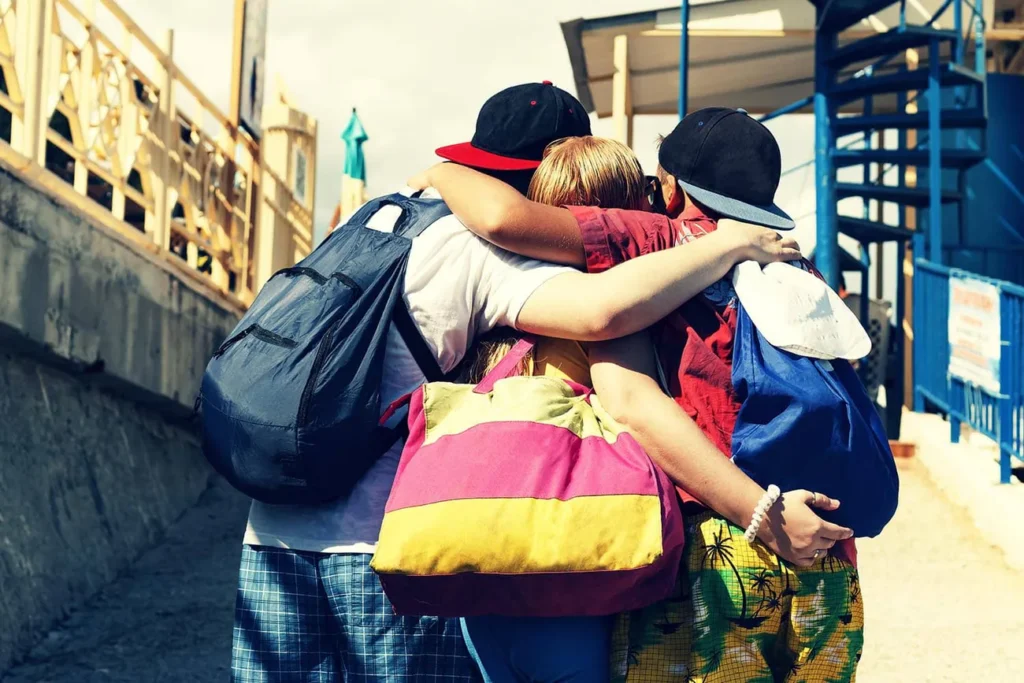
What Makes Traveling With Teenagers Work
Pack Light and Pack Smart
Ask students to keep carry-on bags as small and light as possible. A bag that fits easily in the overhead compartment means no time lost at the gate. No risk of having it checked. More leg room in the seat. The practical rule is straightforward: if you are not sure whether you need it on the plane.
Leave it in the checked bag. For longer flights, the essentials are a neck pillow, an eye mask, ear plugs or noise-cancelling headphones. A light layer for when the cabin temperature drops. Everything else can wait until baggage claim.
Set Watches to Local Time Before Boarding
One of the most effective and simplest jet lag strategies is to shift to the destination’s time zone mentally before the flight departs. Ask students to advance their watches and phones to local time at the destination and to eat and sleep on the plane according to that schedule rather than their home schedule. A student flying from Toronto to Paris who eats dinner at 7:00 p.m.
Paris time and sleeps during what would be night in Paris arrives in better shape than one who stays awake through the European night watching films. The adjustment is not complete, but it is meaningfully helpful.
Dress in Layers
Aircraft cabin temperatures vary, and what begins as a warm boarding experience often becomes a cold cruise altitude. Layers solve this without requiring students to dig through their checked luggage. Thick socks or travel slippers are a consistent recommendation: many students remove their shoes on long flights. Bare feet on aircraft floor surfaces are a hygiene issue better avoided.
During the Flight
Earphones and Entertainment
Some airlines provide earphones; many do not, or the in-seat audio system requires a specific connector type. Ask every student to bring their own earphones. Remind them to bring a book, downloaded podcast, or offline content as a backup for screens that are not working. A student with no earphones and a broken seat-back screen on a nine-hour flight is a teacher’s problem as much as a student’s.
Snacks That Actually Work
Airline meals on long flights are provided. The quantities are modest and the timing does not always align with student hunger. Trail mix, dried fruit, nuts, and protein bars are compact, do not require refrigeration. Manage blood sugar steadily over a long flight better than snack bags of pretzels. Students who eat well on the plane tend to arrive in better condition than those who arrive hungry and reach immediately for airport food at inflated prices in the destination country.
Move Regularly
Ask students to stand up and walk the cabin once every hour or two. In pairs rather than as a group, to avoid disrupting other passengers. Simple seated exercises, rotating ankles, stretching arms above the head, turning the torso. Significantly reduce the stiffness that leads to poor first-day performance on tour. For students on longer flights, compression socks are a practical suggestion.
Sleep Strategically
If the flight crosses into what would be night at the destination, students should sleep. Eye masks and ear plugs are worth distributing before departure rather than asking students to find them in their bags mid-flight. A melatonin supplement taken at the appropriate local time functions as by many experienced travellers. Teachers should inform parents in advance if this is something the group plans to use collectively.
At the Destination
First Day Expectations
The first day on the ground should not be the most demanding day on the itinerary. Students who have crossed multiple time zones arrive with varying degrees of fatigue and disorientation. A packed museum schedule on arrival day tends to produce poor engagement and irritability.
A lighter first afternoon. Time to walk the neighbourhood around the hotel, have dinner. Adjust to local time, produces better performance on subsequent days. Discuss this with your tour consultant when building the itinerary.
Group Communication Rules
Set clear communication expectations before departure. How students will signal if they are separated from the group, what to do if they cannot reach the teacher. Who to call and in what order. Prométour’s tour director stays with the group 24 hours a day and is the first point of contact for any issue that arises.
Students should know the protocol regardless. A laminated card in each student’s pocket with the hotel address, the tour director’s phone number. The teacher’s phone number costs nothing and has resolved numerous situations.
Browse trips to France, Spain, or Québec to get started. The curriculum connections and logistical support available make this one of the most rewarding programmes to build.