
















Why France Belongs in Your French Curriculum
Every French teacher knows the moment a student stops translating in their head and simply understands. It rarely happens at a desk. It happens when the language has somewhere to live: a market to be spoken in, a monument to be read about on the spot, a street sign that suddenly makes sense. France gives a French program that place.
A well-built trip does not replace the classroom; it gives the classroom a destination. Your students travel together, stay together, and discover a country as a class, and the French they have studied all year finally points somewhere real.
History your students can stand inside
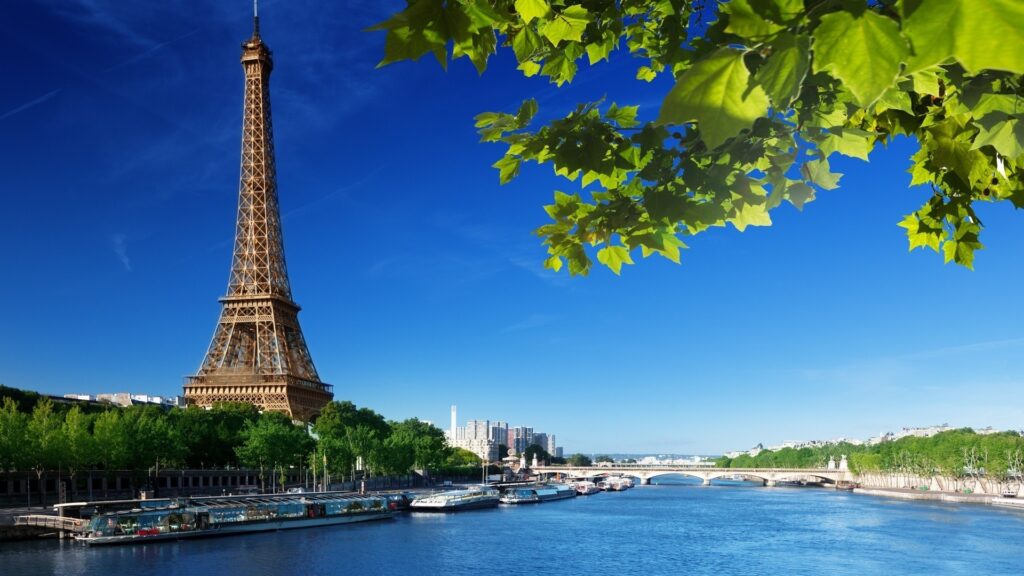
Textbook chapters on the monarchy and the Revolution become concrete when students walk the ground. The Paris, Loire Valley: French Monarchy to Revolution tour moves from the Grand Apartments and Hall of Mirrors at Versailles to the châteaux of the Loire, including Chambord and Chenonceau, then to the Paris of 1789: the Conciergerie where Marie Antoinette was held, the Place de la Bastille, and the square once called the Place de la Révolution. Seeing the distance between royal splendor and revolutionary upheaval in a single trip gives students a sense of cause and consequence that a timeline cannot.
French art, followed to its source
France is where a great deal of the art in your students’ lives was actually made, and the France Art Tour follows it there. Students see the Mona Lisa at the Louvre, then travel south to Monet’s gardens at Giverny, Van Gogh’s Arles, and Cézanne’s studio in Aix-en-Provence, left much as the painter kept it. A perfume-making class in Grasse and a walk through Montmartre round out a route that ties language study to visual culture and gives students plenty to sketch and talk about together.
Discover France as a class, beyond Paris
A country is more than its capital, and the France Cultural Tour is built for a group to explore it together. Students take in the landmarks of Paris, browse an open-air street market, and follow the pastry and chocolate boutiques of the Marais, then head to Bordeaux, whose 18th-century center is a UNESCO World Heritage site. The route continues into the Dordogne and to the Dune du Pilat, the tallest sand dune in Europe. Groups that want a deeper language element can add a host-family stay in Lisses, but the trip is designed first as a shared discovery of France, hotels and all.
Bringing it back to the classroom
The value of a trip like this is not the photographs; it is what happens in September. Students who have used their French to be understood come back with a different relationship to the subject. Ask them to keep a short travel journal in French, to present one place they visited to younger classes, or to compare a French meal with their own family’s, and the trip keeps teaching long after the return flight.
Going further: immersion and homestay
For groups looking to go deeper into the language, France also offers immersive homestay and exchange programs. The Immersion Program: Nice and Côte d’Azur pairs a stay with a Nice host family with daily French classes on the Riviera, and an extended full-week version follows the same format along the coast.
If you are weighing a France trip for your French program, the three cultural routes above cover what most teachers want a group to experience: history, art, and the country beyond Paris. Start with the France Cultural Tour for a broad first trip, the France Art Tour for a visual-culture focus, or the French Monarchy to Revolution tour for a history-forward itinerary. You can browse every French-language option on the French tours page. Every Prométour group travels privately, never combined with another school, and anything you pay is held in trust and fully refundable until you confirm, so you can plan around your school calendar without committing early.