





Why Some Learning Experiences Can Only Happen Outside the Classroom
Learning outside the classroom gives students access to evidence, environments and interactions that cannot be fully reproduced through a lesson or screen. A museum object has scale and texture. A historic street reveals how buildings relate to one another. A conversation in another language requires students to listen and respond in real time. These experiences strengthen classroom learning when they are connected to clear objectives and thoughtful reflection.
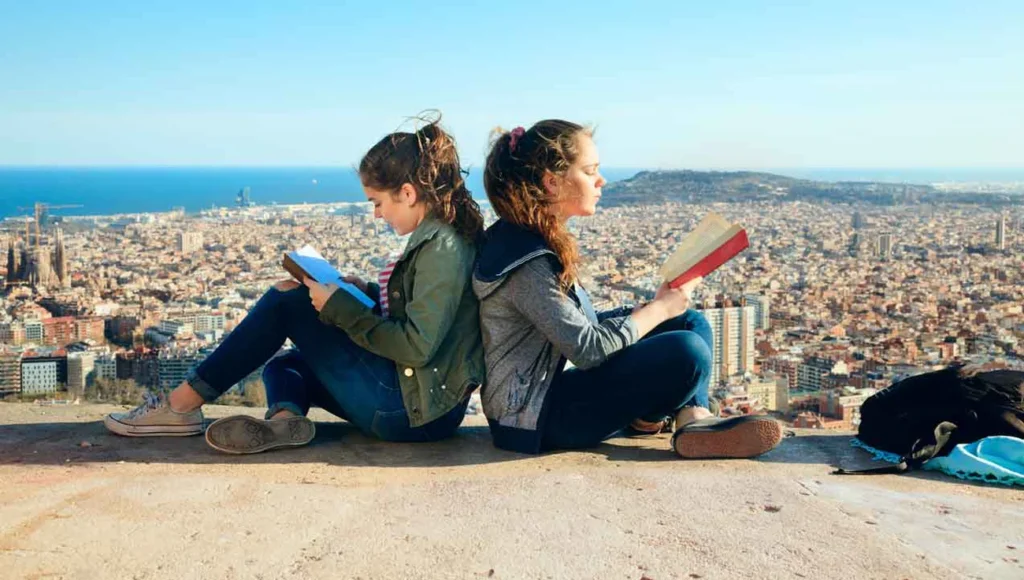
Quick answer: Prométour plans private, custom Spanish student trips abroad that are built around one class and one set of learning goals, so the itinerary, group size, and academic focus fit what a teacher actually needs.
Learning outside the classroom gives students access to evidence, environments and interactions that cannot be fully reproduced through a lesson or screen. A museum object has scale and texture. A historic street reveals how buildings relate to one another. A conversation in another language requires students to listen and respond in real time. These experiences strengthen classroom learning when they are connected to clear objectives and thoughtful reflection.
Place changes the questions students ask
In the classroom, students often respond to questions selected by the teacher. In a real environment, they notice details and generate questions of their own.
Why was a monument placed here? Why does one neighbourhood look different from another? Why is this ecosystem wetter or cooler? Those questions create a stronger basis for inquiry because they begin with direct observation.
Scale and distance become understandable
Maps, diagrams and photographs are essential teaching tools, but they can flatten scale. Walking through a palace, battlefield or archaeological site helps students understand distance, visibility and physical effort.
A student may know the dimensions of a cathedral and still be surprised by how the building controls light and movement. That reaction becomes an entry point for deeper analysis.
Students encounter primary evidence
Historic sites, artifacts, landscapes and public inscriptions function as primary sources. Students can examine what they reveal and what they do not.
A guided visit should encourage evidence-based interpretation rather than passive listening. Students can sketch a feature, compare materials or identify whose perspective is represented.
Language becomes communication
A classroom can prepare students with vocabulary and grammar, but real interaction introduces uncertainty. Speakers use different accents, respond unexpectedly and rely on context.
Students learn that communication includes listening, gesture, clarification and patience. A successful exchange, even a short one, can change how they view their ability.
Field experiences support several learning styles
Some students understand concepts more effectively when they can move, observe and discuss. Others benefit from hearing a guide, taking photographs or connecting an idea to a memorable location.
Learning outside the classroom does not eliminate reading and writing. It gives students additional ways to build the knowledge they later express through those skills.
Shared challenges reveal new strengths
Travel and field learning require organization, cooperation and adaptability. Students may need to navigate, manage time, support a peer or respond calmly when plans change.
These are not secondary outcomes. They contribute to confidence and help teachers see strengths that may remain hidden during conventional classroom tasks.
Direct experience complicates stereotypes
Students often arrive with simplified ideas about another country or community. Daily life rarely fits those assumptions.
Observation and respectful interaction help students recognize regional differences, diverse identities and the limits of generalization. Teachers can reinforce this by asking students to compare expectations with evidence.
A well-designed tour connects experience to curriculum
Educational travel is strongest when activities are selected for a reason. A French cultural itinerary, for example, can connect language practice with art, history and daily life rather than treating each attraction as an isolated stop.
Prométour’s France: Cultural Tour can be customized around the outcomes a teacher wants students to achieve.
Preparation and reflection complete the learning cycle
Before the experience, students need enough context to recognize what matters. During it, they need a manageable way to collect observations. Afterward, they need time to interpret what they saw.
A useful reflection asks students to explain how a specific place changed or complicated their understanding. This moves the response beyond ‘I enjoyed it’ toward academic and personal growth.
Outside learning should remain purposeful and accessible
The value of an experience depends on design, not distance. A local museum, neighbourhood walk or community interview can produce meaningful learning when the objective is clear.
International travel adds cultural and linguistic immersion, but the same principle applies: students should know why they are there and what evidence they are expected to notice.
Place Changes the Questions Students Ask
Learning outside the classroom is powerful because place supplies evidence that a textbook cannot fully reproduce. The scale of a cathedral, the sound of a public square, the distance between battlefield positions, or the smell of a market changes what students notice. Their questions become more concrete because they are responding to an environment rather than an abstract description.
This does not make classroom learning less important. Preparation gives students the vocabulary and background needed to recognize significance. The field experience then complicates that knowledge, while reflection helps students organize what they observed. The value comes from the relationship between all three stages, not from leaving school for its own sake.
Designing Field Learning Around Evidence
A strong activity asks students to collect something they can analyze: a sketch, a quotation, a map annotation, a comparison of two spaces, or a record of how people use a site. When students return, they should use that evidence to defend an interpretation. This turns an outing into disciplined inquiry and helps teachers show that learning outside the classroom is connected to clear academic outcomes.
Questions Worth Exploring With Students
For teachers, the experience becomes most valuable when students know what evidence to look for and how the experience connects to work already completed in class. A focused question, a short observation task, and a purposeful discussion afterward can turn the topic into learning that students can explain in their own words.
For another teacher-focused perspective, read 10 Reasons to Travel With Your Students.
For background research, teachers can consult official sources such as UNESCO World Heritage Centre and the Louvre.
Frequently asked questions
What grade levels are Prométour student trips suitable for?
Because Prométour builds every itinerary privately for a single group, the pacing and content are set to match the class, from middle-school groups to senior students. A teacher shapes the academic focus, so the same route can serve a beginner Spanish class or an advanced one.
How far ahead should teachers plan Prométour student trips?
Most group leaders start nine to twelve months out, which leaves room to confirm dates, fundraise, and align the route with the curriculum. You can request a custom quote and a draft itinerary early, then adjust it as enrolment settles. See the trip page for a starting point.
Will students actually use their Spanish on the trip?
That is the point of a private itinerary. Guided visits, homestays, and everyday interactions are built in so students practise Spanish in real settings rather than only in the classroom.