

















What Canada’s 150th Anniversary Taught Students About National Identity
Canada 150 student learning gives teachers a focused way to connect curriculum goals with authentic experience. Canada’s 150th anniversary in 2017 created a national conversation about Confederation, identity and who is included in public memory. For teachers, the anniversary remains a useful case study because it showed that commemorations are not simply celebrations. They are opportunities to examine competing historical narratives, Indigenous perspectives and the ways a country chooses to represent itself.
Quick answer: Prométour plans private, custom French student trips in Canada that are built around one class and one set of learning goals, so the itinerary, group size, and academic focus fit what a teacher actually needs.
Canada 150 student learning gives teachers a focused way to connect curriculum goals with authentic experience. Canada’s 150th anniversary in 2017 created a national conversation about Confederation, identity and who is included in public memory. For teachers, the anniversary remains a useful case study because it showed that commemorations are not simply celebrations. They are opportunities to examine competing historical narratives, Indigenous perspectives and the ways a country chooses to represent itself.
Anniversaries shape public history
National anniversaries bring history into public spaces through exhibitions, ceremonies, media and school programs. They influence which events receive attention and which symbols are repeated.
Students can analyze anniversary materials as historical sources. Who created them? Which stories appear? Which communities are centred, and which require additional research to understand?
Confederation is a beginning, not the beginning
The year 1867 marks the creation of the Dominion of Canada through the union of Ontario, Quebec, New Brunswick and Nova Scotia. It does not mark the beginning of the land’s history.
Indigenous nations had their own political, economic and cultural systems long before Confederation. A responsible lesson places 1867 within that longer history and examines how expansion affected First Nations, Inuit and Métis communities.
National identity is built through debate
Canada is often described through bilingualism, multiculturalism, geography and parliamentary democracy. Each idea has a history and each is experienced differently across the country.
Students can compare how identity is expressed in Quebec, Atlantic Canada, the Prairies, the North and major urban centres. This prevents a single national story from replacing regional and community perspectives.
Ottawa makes government visible
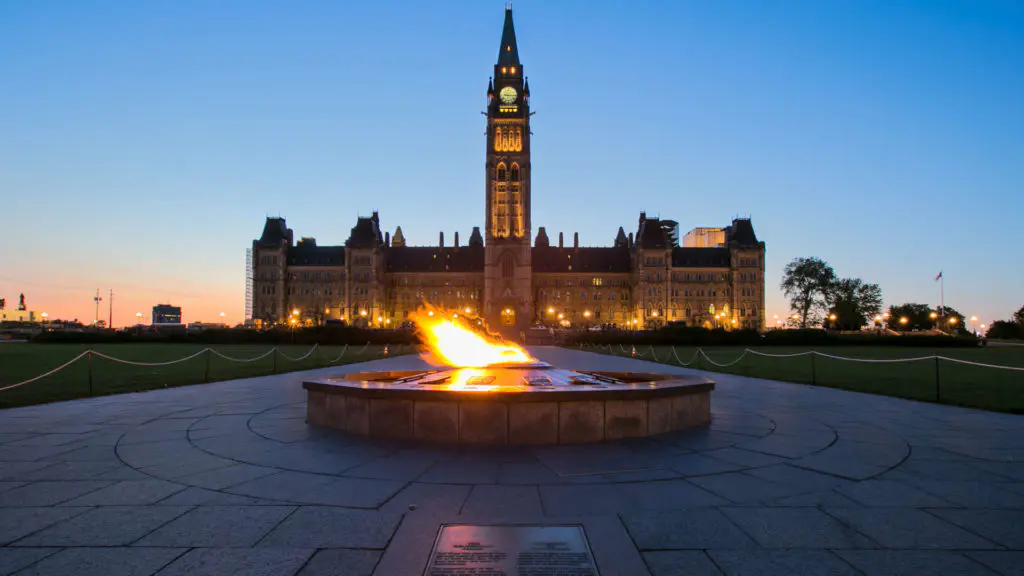
A visit to Ottawa allows students to connect constitutional concepts with real institutions. Parliament, national museums, memorials and public monuments show how government and memory occupy physical space.
Prométour’s Canada: Ottawa, Montreal & Quebec City itinerary links the national capital with two cities that offer distinct linguistic, cultural and historical perspectives.
Quebec adds a vital perspective
Quebec’s relationship with Confederation, French language rights and national identity gives students a strong case study in federalism. Montreal and Quebec City reveal different dimensions of French-speaking Canada, immigration and urban development.
Teachers can use these locations to discuss how one country can contain overlapping identities that are civic, linguistic, regional and cultural.
Public memory changes over time
Monuments and commemorations are often presented as permanent, but their meaning can change. New research, community advocacy and changing values can lead people to reinterpret a historical figure or event.
Students can investigate one monument or museum display and compare how the subject was presented in 1967, 2017 and today. This shows that public history is an ongoing process.
Indigenous perspectives must be central
Canada 150 prompted significant criticism from Indigenous leaders and communities who emphasized colonialism, broken treaties and the continuing effects of residential schools.
Including these perspectives is essential to understanding the anniversary. It helps students see why the same national event can be experienced as celebration by some people and as a reminder of unresolved injustice by others.
Questions teachers can bring into the classroom
Students can ask: What does Confederation explain well, and what does it leave out? How do national symbols create belonging? Can a commemoration celebrate achievements while acknowledging harm? Who has the authority to tell a national story?
These questions support evidence-based discussion and help students distinguish patriotism from uncritical celebration.
What Commemorations Choose to Celebrate
Canada 150 created a useful classroom case study because national anniversaries are never neutral. Public events, exhibitions, and speeches select certain stories to amplify. Students can examine which moments were presented as foundational, which communities were invited to speak, and which histories were treated as uncomfortable interruptions rather than central parts of the national story.
That analysis is especially important in relation to Indigenous peoples. Confederation did not mark the beginning of history on this land, and celebratory narratives can obscure treaties, displacement, residential schools, and ongoing questions of sovereignty. A thoughtful Canada 150 student learning activity asks students to compare official commemoration with Indigenous perspectives and local memory.
Using Anniversary Material as Historical Evidence
Posters, logos, speeches, museum programming, and news coverage can all be treated as primary sources. Students can identify the intended audience, the message being promoted, and the silences within it. The anniversary has passed, but the evidence remains valuable because it shows how a country described itself at a particular moment and how that description was challenged.
What Students Should Notice
For teachers, the experience becomes most valuable when students know what evidence to look for and how the experience connects to work already completed in class. A focused question, a short observation task, and a purposeful discussion afterward can turn the topic into learning that students can explain in their own words.
For another teacher-focused perspective, read What Montréal’s 375th Anniversary Can Still Teach Students.
For background research, teachers can consult official sources such as Parks Canada and Destination Canada.
Frequently asked questions
What grade levels are Canada student trips suitable for?
Because Prométour builds every itinerary privately for a single group, the pacing and content are set to match the class, from middle-school groups to senior students. A teacher shapes the academic focus, so the same route can serve a beginner French class or an advanced one.
How far ahead should teachers plan Canada student trips?
Most group leaders start nine to twelve months out, which leaves room to confirm dates, fundraise, and align the route with the curriculum. You can request a custom quote and a draft itinerary early, then adjust it as enrolment settles. See the trip page for a starting point.
Will students actually use their French on the trip?
That is the point of a private itinerary. Guided visits, homestays, and everyday interactions are built in so students practise French in real settings rather than only in the classroom.