

















HistoryNovember 9, 2018 | 5 min read
The 100th Anniversary of WWI Around the World
WWI educational travel gives students something a textbook cannot: the chance to stand in the landscapes where history unfolded. From the Menin Gate in Belgium to Vimy Ridge in northern France, these memorials make the scale and human cost of the First World War tangible. For history teachers, these sites create clear links to lessons on the causes of the war, military service, remembrance, national identity, and wartime literature. They also give students space to reflect on individual lives behind the statistics.
Prométour creates private, customized school group tours around each teacher’s objectives. Explore the France: World War I & II Tour for France and Normandy, or the UK & Ireland: Britain History & the World at War itinerary for British wartime history.
On November 11, 1918, an armistice came into force between the Allied powers and Germany. It ended more than four years of fighting that had killed millions of soldiers and civilians. Although the centenary has passed, the memorial sites connected to the war remain among Europe’s most powerful educational destinations.
Why WWI Educational Travel Matters
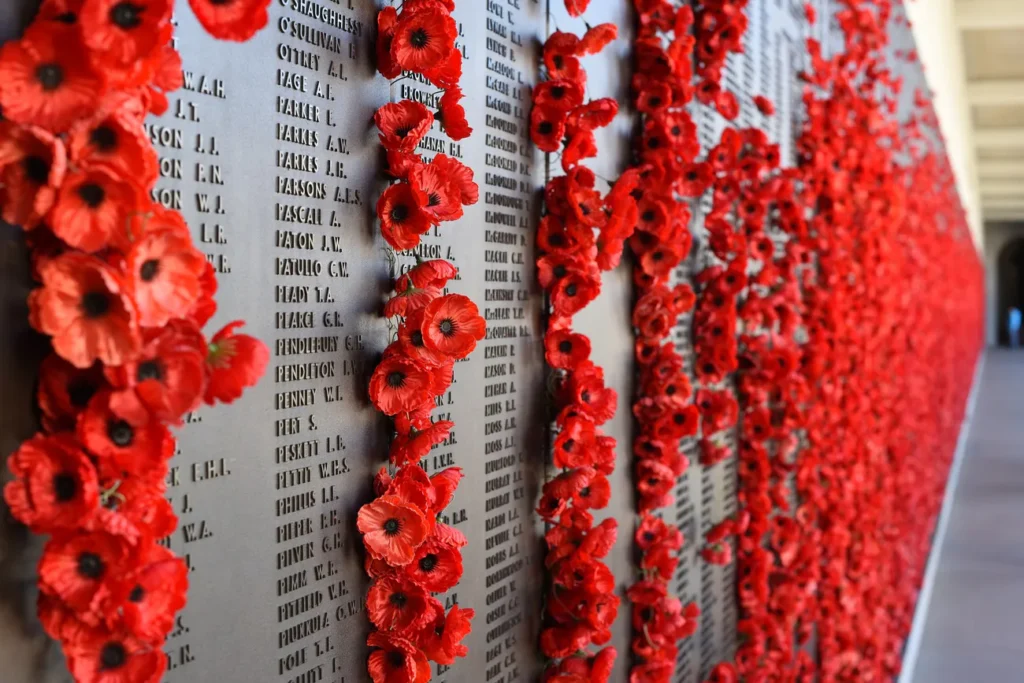
A visit to a battlefield, cemetery, or memorial changes the way students understand scale. Names carved into stone, preserved trenches, and rows of graves turn an abstract casualty figure into thousands of individual stories. As a result, students often return to the classroom with a stronger understanding of remembrance and historical responsibility.
The Menin Gate Last Post Ceremony in Ypres
Every evening at 8:00 p.m., traffic stops beneath the Menin Gate in Ypres while buglers sound the Last Post. The ceremony has taken place since November 11, 1929, apart from the years of German occupation during the Second World War. The gate records the names of 54,896 Commonwealth soldiers who died in the Ypres Salient and have no known grave. For students, hearing the bugles beneath those names creates a direct connection between public remembrance and personal loss.
The Canadian National Vimy Memorial in France
The Canadian National Vimy Memorial stands on Hill 145 in northern France. The Battle of Vimy Ridge took place in April 1917, and the site later became an important symbol in Canada’s national memory. Dedicated in 1936, the monument honours Canadians who served during the First World War. Its walls carry the names of 11,285 Canadian soldiers who died in France and have no known grave. Preserved trenches and shell craters allow students to examine the terrain where the battle was fought.
Prométour’s France: World War I & II Tour includes Vimy Ridge, the Newfoundland Memorial at Beaumont-Hamel, and major Second World War sites in Normandy. The itinerary can be adapted to match a school’s history curriculum.
The Poppies Installation in the United Kingdom
In 2014, artist Paul Cummins and designer Tom Piper created an installation of 888,246 ceramic poppies at the Tower of London. Each poppy represented a British or Commonwealth military death during the First World War. Parts of the installation later travelled across the United Kingdom, while permanent displays were established at Imperial War Museum sites. The project offers teachers a strong way to discuss symbolism, public art, memory, and the challenge of representing loss on such a large scale. For groups studying British wartime history, the UK & Ireland: Britain History & the World at War itinerary provides a more relevant starting point than a general cultural tour.
American Military Cemeteries in France
The American Battle Monuments Commission manages military cemeteries and memorials across Europe. The Meuse-Argonne American Cemetery in France contains 14,246 graves, making it the largest American military cemetery in Europe. The Aisne-Marne American Cemetery at Belleau Wood contains 2,289 graves. These sites help American history students connect national participation in the war with individual service and sacrifice. They also support discussions about commemoration, diplomacy, and the long-term relationship between the United States and Europe.
St. Symphorien Cemetery in Belgium
St. Symphorien Cemetery near Mons contains both Allied and German graves. It is also the burial place of Private John Parr, often identified as the first British soldier killed in the war, and Private George Price, often identified as the last Canadian soldier killed before the armistice. Because the cemetery is small and quiet, it offers a different learning experience from a large national memorial. Students can consider the shared human cost of war while examining how former enemies are remembered within the same landscape.
Curriculum Connections
A student trip to WWI memorial sites supports Canadian and American secondary history curricula. Teachers can connect the visit to the causes and consequences of the war, the role of Canada and the United States, the Treaty of Versailles, military technology, national identity, and wartime literature.
At Vimy Ridge, the curriculum connection is especially clear. The battle remains central to how many Canadians understand the country’s emergence as a nation. In addition, the Menin Gate, military cemeteries, and memorial art allow students to compare different forms of remembrance.