




Exploring Indigenous Heritage on a School Trip to Quebec
Quebec’s Indigenous history is not a side note to a trip; it is built into the names on the map. The word Canada comes from the Huron-Iroquois kanata, meaning village or settlement, and Quebec comes from the Algonquin kébec, meaning where the river narrows. For a class heading to the province, that is a useful place to start: the country and the city were named by the people who were here first, and their cultures are still very much present today.
How can students learn about Indigenous heritage in Quebec?
The clearest way is to pair context with a direct visit. Students benefit from a short grounding in who the First Nations of Quebec are, followed by time at a living cultural site such as the Huron-Wendat village near Quebec City, where guides from the community lead the experience. According to the 2021 Census, about 1.8 million people in Canada identify as Indigenous, roughly 5 percent of the population, and Canada is home to more than 630 First Nations communities. Quebec alone is the territory of 11 Indigenous nations, including the Huron-Wendat, Mohawk, Cree, Innu, and Algonquin.
Start with the names and the numbers
A ten-minute classroom primer before departure changes how students experience the trip. Establish that Indigenous peoples in Canada are made up of First Nations, Inuit, and Métis, that Quebec is home to 11 distinct nations, and that the language they will hear in place names, kanata, kébec, and many rivers and towns, is a record of that presence. Students who arrive already understanding that Quebec City sits on long-inhabited land read the place very differently from those who treat it only as a French colonial story.
Visit the Huron-Wendat village near Quebec City
About 30 minutes outside Quebec City, in the community of Wendake, the Huron-Wendat village offers a guided visit led by members of the nation. Students walk through a traditional longhouse, step inside a sweat lodge, see a handmade canoe, and learn how the Huron-Wendat lived and live today. The visit is hands-on rather than a passive tour: groups can take part in workshops that range from traditional crafts and a fur workshop to storytelling of tales and legends, traditional music, and Huron games, and the program can be shaped around what a particular class is studying.
Many groups add the optional traditional meal, which is itself a lesson. The menu features dishes such as soup and bannock, bison, and a maple-sauced cake, giving students a tangible sense of an Indigenous food culture rather than a description of one. Food, language, and craft together make the heritage concrete in a way a textbook cannot.
Curriculum connection and teacher takeaway
This topic maps onto several subjects at once. History classes can examine the relationship between Indigenous nations, French settlement, and the modern province. Geography classes can trace how Indigenous place names describe the land, the narrowing river, the portages, the trade routes. French immersion groups pick up vocabulary and hear how Indigenous, French, and English histories sit side by side in Quebec today. And a community-led visit models something valuable on its own: hearing a culture described by the people who belong to it.
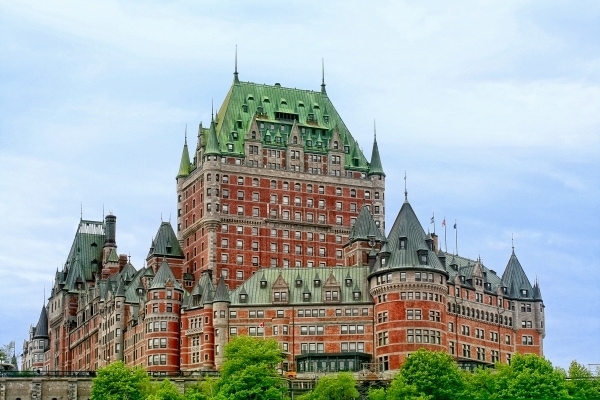
The takeaway for planning is that Indigenous heritage works best woven into a Quebec itinerary, not bolted on. A morning at Wendake pairs naturally with Quebec City’s historic core, so students move between two layers of the same place in a single day. That is the kind of itinerary we build into our Quebec historical tours and culture and traditions programs, and it is part of the wider history educational travel we design for teachers who want students standing in the places they study.
Key takeaways
- The names Canada and Quebec both come from Indigenous languages, kanata and kébec.
- About 5 percent of Canadians identify as Indigenous, and Quebec is the territory of 11 nations.
- The Huron-Wendat village near Quebec City offers a community-led, hands-on visit, including longhouse, workshops, and a traditional meal.
- The topic connects to history, geography, and French immersion at the same time.
- Indigenous heritage lands best when integrated into a Quebec itinerary rather than treated as a separate stop.
Building a Quebec trip and want Indigenous heritage to be part of the story alongside Quebec City and the capital region? That kind of itinerary is exactly what we design from scratch around what a teacher wants their students to take home.