











Puerto RicoSpanishSeptember 10, 2026 | 3 min read
Puerto Rico: A Spanish Trip With No Passport Needed
Puerto Rico offers a Spanish class a rare combination: a place where the language and culture feel genuinely different from the mainland, reached without the paperwork of a foreign trip. For US school groups, that difference matters, because students who are US citizens travel there without a passport.
What they find is a Spanish-speaking island with its own history, music, and food, explored as a group across a few unforgettable days. For many teachers, it is the trip that makes an international experience possible for students who might not otherwise get one.

A Spanish-speaking trip without the passport hurdle
The practical barrier to a first international trip is often documentation, and Puerto Rico removes it for US citizens. That opens the door for students who do not hold passports, and it means less administration for you. Once students arrive, Spanish is all around them, on signs, in shops, and in conversation, so the immersion is real even though the logistics are simple.
Old San Juan and living history
The Puerto Rico Culture, History and Nature tour grounds a group in the island’s past. Students walk Old San Juan and the El Morro fortress, tour the city of Ponce, and visit the Centro Ceremonial Indígena de Tibes, a Taíno ceremonial site that reaches back long before European contact. It gives students a sense of the layers that make Puerto Rican identity distinct.
Nature that becomes the lesson
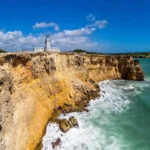
Puerto Rico packs remarkable range into a small island, and both itineraries use it. Students hike El Yunque, the only tropical rainforest in the US national forest system, and the Puerto Rico Island Highlights tour adds the Cabo Rojo salt flats, a mangrove boat tour, and time at Luquillo Beach. The high point for many groups is a night paddle in a bioluminescent bay, where the water lights up with every stroke, a genuinely rare natural sight that turns into a science conversation on its own.
Music and Afro-Caribbean culture
Puerto Rican culture is impossible to separate from its music, and the trip leans in. Students take part in a bomba drumming and dance workshop, an Afro-Caribbean tradition, and share a meal at Piñones, where the island’s African, Taíno, and Spanish roots meet on the plate. The Santurce street-art district adds a contemporary layer, showing students that the culture is still being made.
Bringing it back to the classroom
Puerto Rico gives Spanish class an accessible, culturally rich trip that students can actually reach. Ask them to write a short reflection in Spanish on the bomba workshop, to research the Taíno history they encountered at Tibes, or to compare Puerto Rican Spanish with what they hear in class, and the island keeps teaching after the trip ends.
For a Spanish program that wants an international feel without an international barrier, Puerto Rico is hard to beat. The Puerto Rico Culture, History and Nature tour is the fuller five-day itinerary, while the Puerto Rico Island Highlights tour covers the essentials in four. Both sit alongside our other Spanish-language trips on the Spanish tours page. Prométour groups are always private and never combined, and anything you pay is held in trust and fully refundable until you confirm, so there is no pressure to commit before your group is ready.