



7 Amazing Pilgrimages You Should Try and Experience at Least Once
A Spain pilgrimage student trip can connect religious studies with medieval history, architecture, geography, and cultural identity. These seven routes and sacred sites show how pilgrimage shaped communities across the country. Routes and sites that have drawn travellers for over a thousand years. For history, religious studies, and social studies teachers, these places offer a direct and substantive encounter with the forces, faith, conflict.
Culture, that shaped medieval and early modern Europe. Here are seven pilgrimage sites and routes worth including on a student trip to Spain. Spain pilgrimage sites offer history and religious studies students a student trip destination unlike any other in Europe.
Why a Spain Pilgrimage Student Trip Supports Several Subjects
The Camino de Santiago, or Way of Saint James, is a network of pilgrimage routes across Europe that converge on the Cathedral of Santiago de Compostela in the northwest of Spain. The remains of Saint James the Apostle are said to rest. The most travelled route, the Camino Francés, runs 780 kilometres from the French Pyrenees to Santiago.
Student groups typically walk a section of the Camino rather than the full route. Most commonly the final 100 kilometres from Sarria. Qualifies walkers for the Compostela certificate. The walk connects students to one of the longest-running pilgrimage traditions in the Western world and to the landscapes, villages.
Hospitality culture of rural Galicia. For teachers who want a physically engaging, culturally substantive experience that students prepare for and reflect on. A Camino section is one of the most reliably meaningful activities in educational travel.
2. La Almudena Cathedral, Madrid
When Madrid replaced Toledo as Spain’s capital, the city had no cathedral. Construction of the Catedral de Santa María la Real de la Almudena began in 1879 and was not completed until 1993. Pope John Paul II consecrated it. The cathedral sits directly opposite the Royal Palace of Madrid, and its interior, a mixture of Neo-Gothic, Neo-Romanesque.
Modern design reflecting different phases of construction over more than a century, is a productive site for architecture and art history students. The seat of the Roman Catholic Archdiocese of Madrid, it draws pilgrims and visitors year-round. Our Spain: Classic Tour includes time in Madrid and can incorporate a visit to La Almudena.
3. The Convent of Saint Joseph and the City of Ávila
The walled city of Ávila, sometimes called the city of saints and stones. Is the birthplace of Saint Teresa of Ávila, the 16th-century mystic, reformer. Writer who founded the Discalced Carmelite order and established its first monastery, the Convent of Saint Joseph, in 1562. The convent has been recognised as a national monument since 1968 and welcomes visitors.
The medieval walls surrounding the city, among the best-preserved in Europe, are a curriculum connection for architecture and medieval history teachers. The Cathedral of Ávila, begun in the 12th century, ranks as one of the earliest Gothic cathedrals in Spain and contains the tomb of Alonso de Madrigal. A significant medieval scholar. Ávila is a natural day trip from Madrid.
4. The Holy Cave of Covadonga
In the Picos de Europa mountain range in northern Spain. The Cave of Covadonga marks the site of the Battle of Covadonga in 722. Pelayo of Asturias and a Christian force defeated a Moorish army in what ranks as the first major Christian victory of the Reconquista.
The centuries-long process by which Christian kingdoms reclaimed the Iberian Peninsula from Moorish rule. The cave contains a statue of the Virgin of Covadonga, venerated as the patron of Asturias. Is a significant pilgrimage site. For history students studying medieval Iberia, the Reconquista, or the relationship between Christianity and Islam in European history. Covadonga is a compelling and physically dramatic site.
5. The Mosque-Cathedral of Córdoba (La Mezquita)
La Mezquita in Córdoba is one of the most architecturally significant buildings in the world. A 10th-century mosque of extraordinary scale and beauty, into which a Christian cathedral dates to in the 16th century. Leaving both structures simultaneously present and in tension. The forest of 856 columns with their distinctive red-and-white striped arches, the mihrab facing Mecca.
The Renaissance cathedral rising through the centre of the mosque make it an ideal site for discussions of religious coexistence. Architectural history, and the legacy of Al-Andalus. For students studying the medieval Mediterranean, there is no better single building in Spain. Our Spain: Art and Architecture Tour includes Córdoba as a core destination.
6. Montserrat, Catalonia
The Benedictine monastery of Montserrat sits 1,236 metres above sea level on the jagged rocky mountain of the same name. 50 kilometres northwest of Barcelona. It houses the Black Madonna of Montserrat, one of the most venerated images in Catalonia and a major pilgrimage destination.
The monastery’s Boys’ Choir, the Escolania, is one of the oldest choral schools in Europe, founded in the 13th century. The mountain itself is a protected natural park with walking paths and a rack railway. For music, art history. Religious studies teachers, Montserrat combines natural landscape, medieval architecture, active monastic life.
One of the great choral traditions of Europe in a single morning or afternoon. Our Spain: Catalonia Cultural Tour includes a visit to Montserrat.
7. The Shrine of Fátima, Portugal
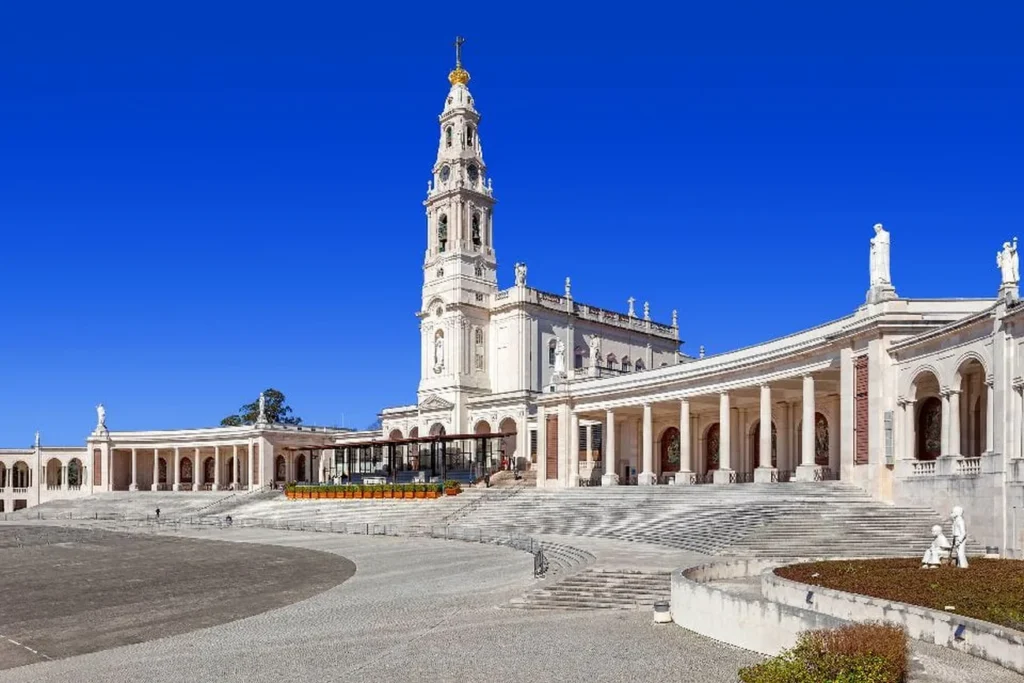
Just across the Spanish border in central Portugal, the Sanctuary of Our Lady of Fátima is one of the most visited Marian pilgrimage sites in the world. Drawing millions of visitors each year. The site marks the location where three shepherd children reported apparitions of the Virgin Mary in 1917, and the basilica, gardens.
Chapels built around that site now form one of the most significant Catholic pilgrimage destinations in Europe. For teachers taking students through Spain who want to extend the itinerary into Portugal. Fátima is accessible from Seville or Madrid and adds a dimension of modern religious history. The apparitions occurred during WWI, a year of significant global upheaval, to an itinerary already rich in medieval and Renaissance content.
Prométour builds fully private, custom school group tours to Spain designed around your history, religious studies, or social studies curriculum. Browse theSpain: Classic Tour,Spain: Art and Architecture Tour. OrSpain: Catalonia Cultural Tourto see what a customised itinerary could look like for your group. For teachers planning a spain pilgrimage sites student trip, the curriculum connections and logistical support available make this one of the most rewarding programmes to build.