




MartiniqueFrenchSeptember 10, 2026 | 3 min read
Martinique: A French Classroom in the Caribbean
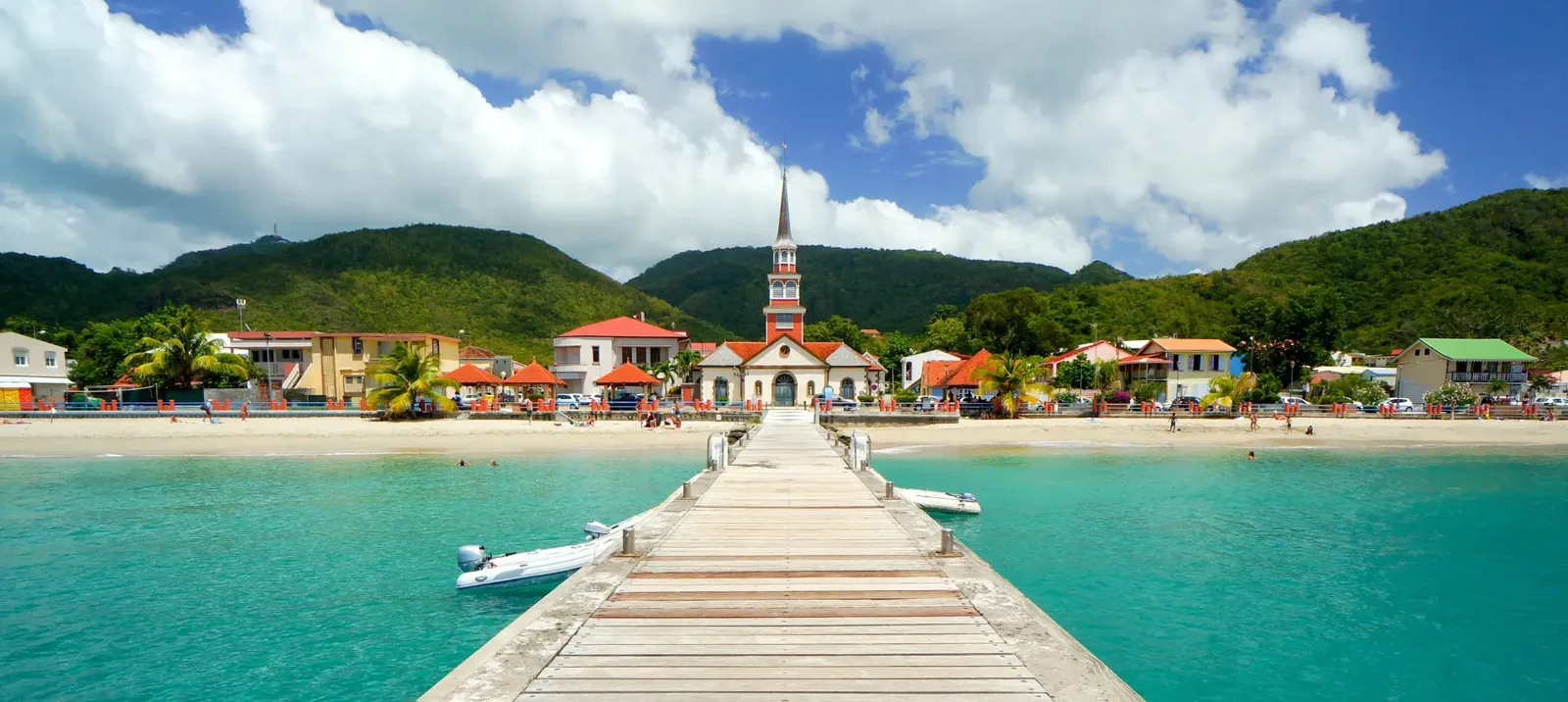
When French teachers picture a French-speaking destination, they usually picture France. Martinique quietly makes the case for somewhere else. It is a French region in the eastern Caribbean, where students hear French every day, spoken alongside Martinican Creole, in a place that looks nothing like a European city.
For a class that has only ever met France in a textbook, Martinique reframes the whole subject. Students travel and explore as a group, and they discover that French is not one country’s language; it is a thread running through a distinct island culture with its own history, food, and way of speaking.
A French island, discovered as a group
The Martinique Culture, History and Nature tour is built for a class to explore the island together. Students tour Fort-de-France, the capital, with its colorful market and the Schoelcher Library, sail the bay by catamaran with a Creole lunch on board, and take in Mount Pelée and the ruins of Saint-Pierre, the former capital the volcano destroyed in 1902. Because Martinique is part of France, French is the language of school, signage, and daily business, so students use what they have learned in a setting that feels nothing like a classroom.
History that asks real questions
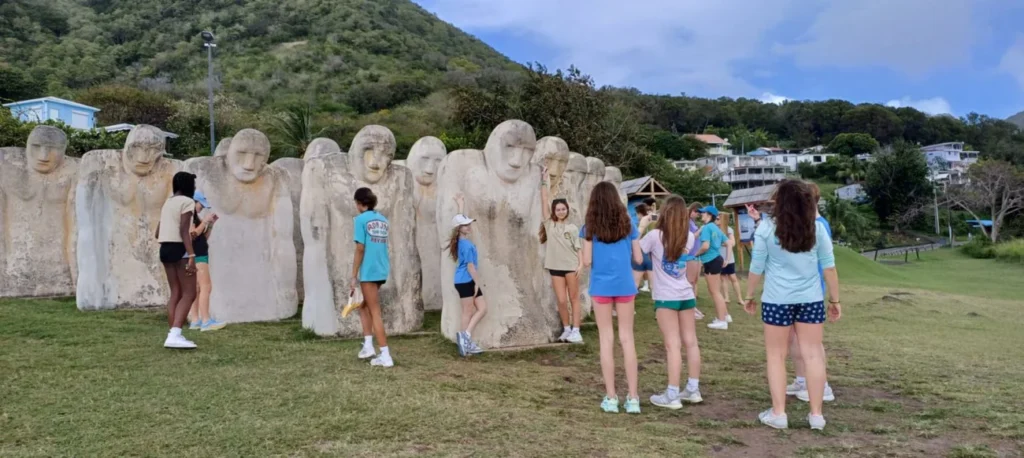
Martinique does not hide its past, and that honesty is valuable for students. At La Savane des Esclaves, a re-created village, a guided visit traces four centuries of history from Indigenous times through slavery to life after abolition. Students also visit the birthplace of Empress Joséphine, whose story is tied to that same plantation economy, and a rum estate at Habitation Clément that speaks to the island’s working history. These are stops that let a class sit with difficult history rather than skim past it.
Culture you can see being made
A lot of what makes Martinique itself is craft and community, and the Martinique Cultural Immersion tour puts students close to it. This is group travel with hands-on days: Kalinago arts workshops in basketry, pottery, and weaving, fishing workshops at Le Vauclin where local fishermen show how the daily market really works, and Afro-Caribbean percussion and dance shared with local hosts. Students practice French throughout, in the most natural way possible, by doing something alongside the people who live there.
Landscapes that frame the story
Martinique’s setting is part of its lesson. A mangrove boat tour with a local naturalist shows an ecosystem students may only have read about, the Jardin de Batala holds thousands of tropical plant varieties, and Les Salines Beach gives a group an afternoon to regroup. Mount Pelée looms over all of it, the same volcano that shaped the island’s most dramatic chapter. The scenery is where the learning is set, not a break from it.
Bringing Martinique into the classroom
A Martinique trip gives a French course a wider frame: the language attached to real history, real music, and a real community. Ask students to compare Martinican Creole expressions with their standard French, to research how Joséphine’s story connects to what they saw, or to write a short reflection in French on La Savane des Esclaves, and the island keeps working as a teaching tool well past the trip.
Martinique is a strong choice for a French program that wants depth alongside a shared group experience. The Martinique Culture, History and Nature tour is the fuller itinerary, while the Martinique Cultural Immersion tour puts hands-on culture and local exchange at the center. Both sit alongside our other French-language trips on the French tours page. Prométour groups are always private and never combined, and anything you pay is held in trust and fully refundable until you confirm, so there is no pressure to commit before your group is ready.