












Learning About Huron-Wendat Culture at Wendake
A visit to Wendake offers students an opportunity to learn about the Huron-Wendat Nation through its own cultural institutions, community context, and contemporary presence. It should not be treated as a brief “Indigenous culture” stop or as a window into a culture that exists only in the past.
A respectful Wendake educational visit begins with the understanding that the Huron-Wendat Nation is a living, self-governing community with its own history, identity, institutions, and priorities.
Quick answer: Prométour plans private, custom history student trips in Québec that are built around one class and one set of learning goals, so the itinerary, group size, and academic focus fit what a teacher actually needs.
A visit to Wendake offers students an opportunity to learn about the Huron-Wendat Nation through its own cultural institutions, community context, and contemporary presence. It should not be treated as a brief “Indigenous culture” stop or as a window into a culture that exists only in the past.
A respectful Wendake educational visit begins with the understanding that the Huron-Wendat Nation is a living, self-governing community with its own history, identity, institutions, and priorities.
Begin With the Correct Historical Framework
The Huron-Wendat people have deep roots in the Great Lakes region and experienced major displacement during the seventeenth century. The community later established itself near Québec City. Students benefit from understanding this movement as part of a longer history of diplomacy, trade, conflict, colonial expansion, and resilience.
Teachers should avoid presenting Indigenous history as beginning with European contact. Pre-contact societies had sophisticated political systems, economies, technologies, and diplomatic relationships.
Learn Through Huron-Wendat Interpretation
The strongest learning comes from museums, guides, cultural sites, and programs shaped by Huron-Wendat voices. Students should pay attention not only to the information presented, but also to who is interpreting the history and why that perspective matters.
Connect Material Culture With Knowledge Systems
Objects such as clothing, tools, art, and architectural forms should not be reduced to decorative artifacts. They reflect knowledge about climate, materials, trade, family roles, spirituality, and community organization.
Students can ask how an object was made, what knowledge it required, and how its meaning may have changed over time.
Recognize Contemporary Culture and Governance
Wendake is a modern community. Discussions can include language revitalization, cultural tourism, education, economic development, and the role of the Huron-Wendat Nation’s government. This helps students move beyond the common misconception that Indigenous culture belongs only to history.
Prepare Students for Respectful Participation
Before the visit, establish expectations for photography, questions, sacred or sensitive topics, and listening. Students should understand that curiosity is welcome when it is paired with humility and respect.
Avoid asking individuals to speak for all Indigenous peoples. The Huron-Wendat Nation has a specific history and identity, and its experience should not be generalized to every First Nation, Inuit, or Métis community.
Connect Wendake With Québec History
A visit to Wendake adds necessary depth to a Québec itinerary. It allows students to compare French colonial narratives with Indigenous perspectives and to examine relationships that shaped trade, settlement, diplomacy, and the region’s development.
Prométour’s Quebec: Culture and Traditions can incorporate Wendake within a broader program focused on language, history, and regional identity.
Reflection After the Visit
Ask students to identify one assumption that changed, one question they still have, and one example of cultural continuity. This encourages careful reflection without turning the experience into a simplistic summary.
The most important outcome is a more accurate understanding: Huron-Wendat history is essential to the history of the region, and Huron-Wendat culture remains active, evolving, and self-defined today.
Choosing Language Carefully
Teachers should use the Nation’s preferred name and avoid outdated umbrella terms. Language changes, so current materials from Huron-Wendat institutions should guide classroom preparation.
Students should also distinguish between cultural appreciation and entitlement. Being invited to learn does not make every story, image, ceremony, or object available for unrestricted use. Respect includes recognizing boundaries set by the community.
Begin With a Living Nation, Not a Past-Tense Culture
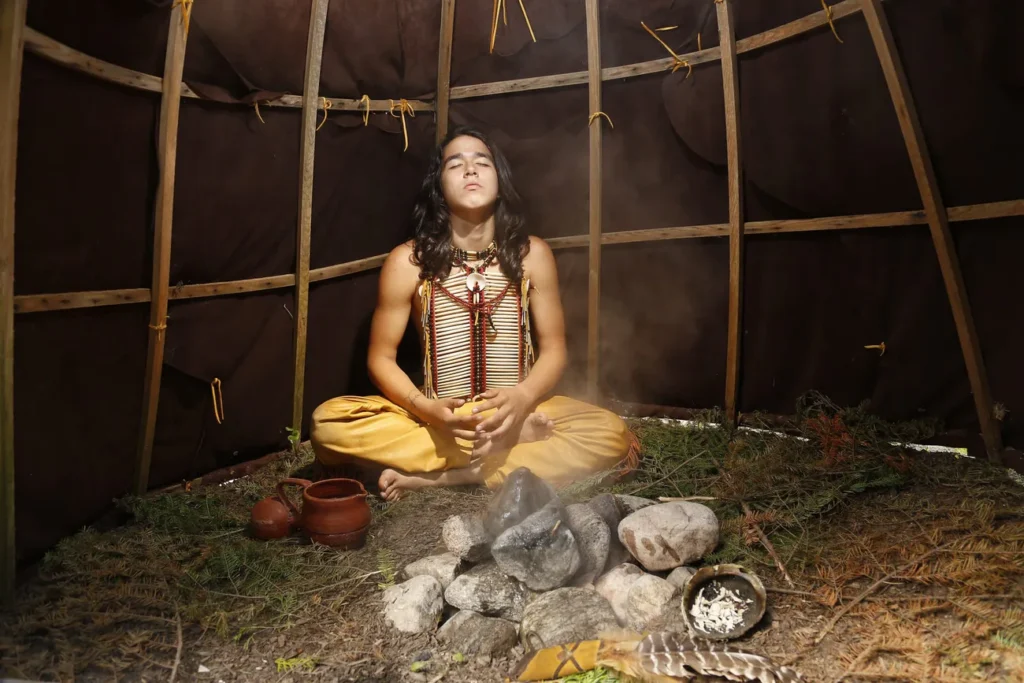
A Wendake educational visit should begin with the understanding that the Huron-Wendat Nation is contemporary, self-governing, and culturally active. Museums, interpretation, art, language, and community institutions provide evidence of continuity and adaptation rather than a story that ends with early colonial contact.
Students should be prepared to notice who is speaking and how knowledge is presented. Community-led interpretation differs from learning about Indigenous peoples through an outside institution. That difference is itself worth discussing.
Connect the Visit to Wider Questions
Wendake can support learning about diplomacy, trade, displacement, treaty relationships, language revitalization, and cultural tourism. Reflection should ask students what assumptions changed and which questions require further learning. Respectful education does not aim to make students feel that one visit has made them experts; it helps them recognize the responsibility to keep listening.
Community-Led Interpretation Changes the Learning Experience
A visit to Wendake is most valuable when students encounter Huron-Wendat history through the voices and institutions of the community itself. This approach challenges the tendency to place Indigenous peoples only in the distant past. Students learn about political leadership, language revitalization, artistic practice, entrepreneurship, and the ongoing relationship between territory and identity.
Preparation matters. Teachers should introduce the distinction between learning about a community and treating culture as a spectacle. After the visit, students can reflect on how their understanding changed when history was presented by the people whose history it is.
What Makes the Experience Educational
For teachers, the experience becomes most valuable when students know what evidence to look for and how the experience connects to work already completed in class. A focused question, a short observation task, and a purposeful discussion afterward can turn the topic into learning that students can explain in their own words.
For another teacher-focused perspective, read 20 Educational Reasons to Visit Québec With Your Students.
For background research, teachers can consult official sources such as the Huron-Wendat Museum and Parks Canada.
Frequently asked questions
What grade levels are Québec student trips suitable for?
Because Prométour builds every itinerary privately for a single group, the pacing and content are set to match the class, from middle-school groups to senior students. A teacher shapes the academic focus, so the same route can serve a beginner history class or an advanced one.
How far ahead should teachers plan Québec student trips?
Most group leaders start nine to twelve months out, which leaves room to confirm dates, fundraise, and align the route with the curriculum. You can request a custom quote and a draft itinerary early, then adjust it as enrolment settles. See the trip page for a starting point.
How is a private group trip different from an off-the-shelf tour?
A private itinerary is built around one class rather than pooled with strangers, so the schedule, academic focus, and group size fit the teacher’s goals. That control is the core of how Prométour works.